Referral Conversion Rate vs Cold Leads Roofing: The Real Gap
The referral conversion rate vs cold leads roofing companies buy is a gap most owners feel long before they ever measure it. A neighbor's recommendation often signs on the first visit. A purchased name runs through a string of calls and still opens with a discount request. Same crew, same estimator, same roof. What changes is where the conversation starts. A referral shows up with the credibility question already settled, so the sale opens at scope and price. This post covers the mechanism behind that, what it does to your cycle length and your margin, and how to measure the spread in your own shop without buying anything.
Why the referral conversion rate vs cold leads roofing gap exists
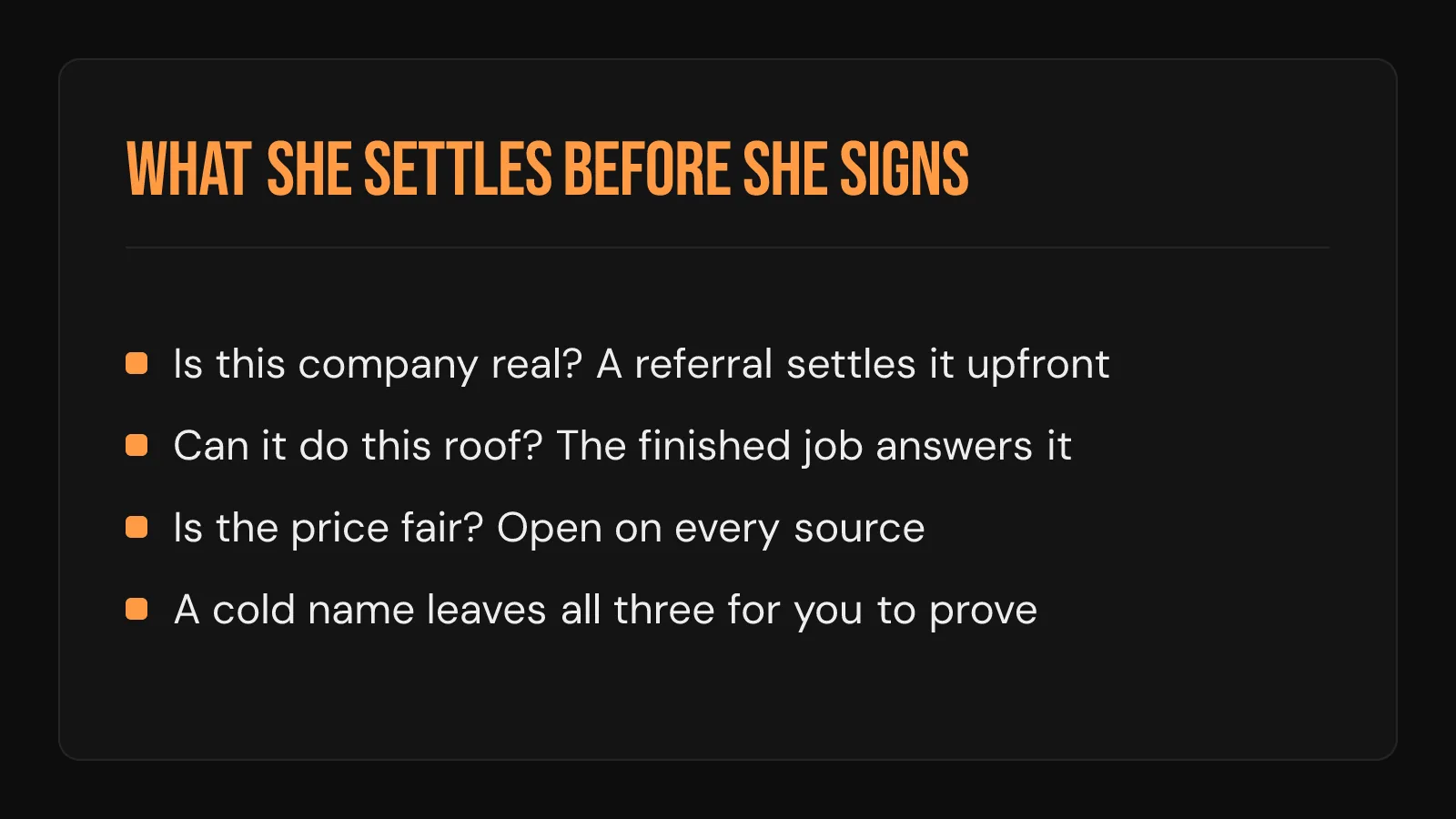
A homeowner replacing a roof has three questions to settle before she signs. Is this company real? Can it do this roof? Is the price fair? She has no way to judge the second one on her own, and only a rough sense of the third.
A referral settles the first two before she dials. Someone she already trusts put his own standing behind your name, about a job she can drive past and look at. The checking she would have done herself was done by him, at his risk. That is what transfers in a referral: the verification work, and the risk of getting it wrong.
The same pattern turns up in a market with nothing to do with roofs: contractors picking new software. Contractors who heard from real customers first were 5.2x happier with what they bought, and 68% decide within three months. Hearing it from someone with skin in the game changes the confidence and the clock together.
A cold name leaves all three questions open at once:
- Is this company real stays open, and she is running you against the two other crews who called this week.
- Can it do this roof stays open, and every proof point comes from you, which she quietly discounts because you are the one selling.
- Is the price fair stays open, and with no trust anchor her only reference is whatever the other bids say.
What changes inside the close conversation
Line the two conversations up and the difference is structural. On a referral you open at scope. On a cold lead you open at credibility, and everything after that runs uphill.
Sellers who develop the need before pitching hear 55% fewer objections. A referral arrives with most of that development already done by somebody else, so the objections that survive tend to be about the roof itself. Scope, timeline, materials.
| What still has to be proven | Referral | Cold or canvassed | Purchased or marketplace |
|---|---|---|---|
| That you are real | Settled by the referrer before she calls | Yours to prove, live, on the first call | Yours to prove against three crews at once |
| That you can do this roof | Carried by a job she can drive past | Built from photos, reviews, and how you sound | Built the same way, with less time |
| That the price is defensible | Weighed against work she already trusts | Weighed against whatever the other bids say | Weighed against bids landing the same day |
| That the timing works | Flexible, because she is waiting on you | Competitive, because somebody can start sooner | The last lever left once price gets matched |
Where all of that finally lands as a percentage is a separate read, and the benchmark close rates behind that spread already carry those numbers.
Cycle length, touch count, and the price conversation
The gap shows up in three places you can feel inside a single week of work.
- Cycle length. A referral skips the research stage. She is confirming a decision her neighbor mostly made for her, which is why the estimate visit so often doubles as the close. A cold lead walks the whole path, and every day of it is a day a competitor can get in front of her.
- Touch count. 80% of sales take five or more follow-ups to close. Every stage a referral skipped gets run manually on a cold lead, one call at a time, against a homeowner fielding calls from other crews between yours. The economics of buying that volume look different once you price the hours those touches take.
- The price conversation. A homeowner who already trusts the outcome is buying a roof. A homeowner comparing three strangers on a spreadsheet is buying a number, and a number is the easiest thing in the world to talk down. Price resistance tracks how much trust walked in the door with her.
Fewer days, fewer touches, less pressure on the number. That is the referral conversion rate vs cold leads roofing difference in practice, and it compounds across a year of jobs.
How to measure the gap in your own shop
General claims about this gap are cheap. Your own number, on your market, with your crew, is the one that changes what you do next. Two buckets and four things written down get you there in a quarter.
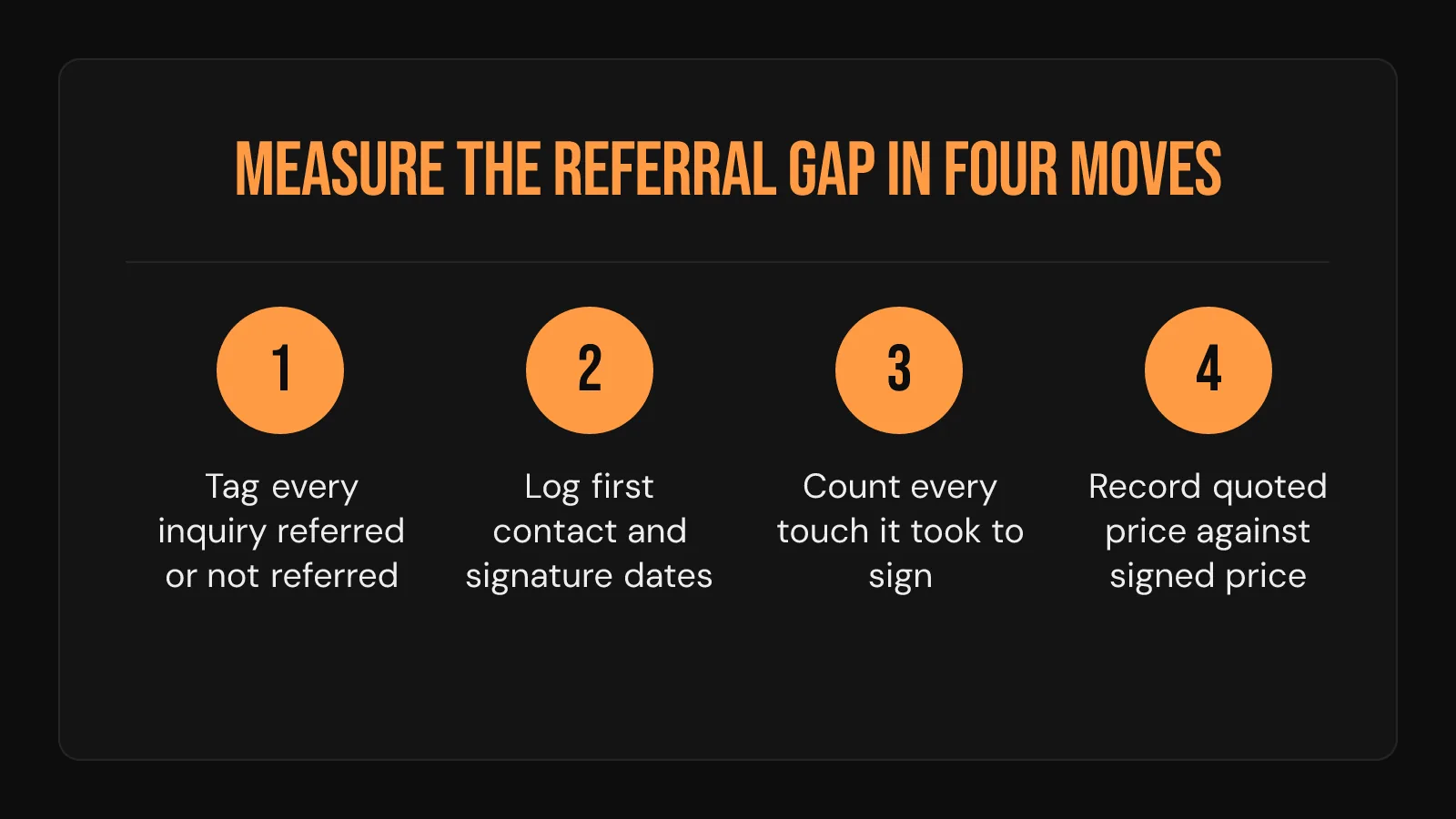
- Tag every inquiry the day it arrives. Two buckets only: referred, or not referred. A repeat customer counts as referred. A name off a vendor list does not.
- Write down the date of first contact and the date of signature. The gap between them is your cycle length, per bucket.
- Count the touches. Every call, text, and visit it took to reach a signature, including the ones nobody picked up.
- Record the quoted price and the signed price. The distance between them is what the conversation cost you.
| Bucket | Days to signature | Touches to signature | Quote to signed change |
|---|---|---|---|
| Referred | |||
| Not referred |
Close rate by source is a different sheet with different columns, and per-source tracking across every channel you run covers that version properly. This one stays narrow on purpose. Three numbers, two rows, one quarter.
The spread between those two rows is the number that changes decisions, and one quarter of honest tagging beats any conversion figure you will read on a blog, this one included.
Referrals do not scale on demand
The referral advantage comes with a hard ceiling. Referral volume is jobs already finished multiplied by the share of customers who pass your name along. Both numbers are capped by your crew's capacity and by last quarter's work. A slow March cannot be fixed by turning referrals up, because there is no dial to turn. The purchased alternative carries its own moving numbers, and current roofing lead costs and close rates by source is where those sit today.
What can be engineered is the rate:
- Ask while the truck is still in the driveway and the finished roof is the freshest thing on her mind.
- Give the crew one line to say at the final cleanup, so the ask stops depending on whoever remembers it.
- Keep the review flow steady, because the recommendation gets checked before she calls. 27% of consumers now put the most weight on reviews from the past two weeks. A review cadence that runs every week is the operating version of this.
A vouch still has to survive the days after it happens. She looks you up to confirm what the neighbor told her, and the honest read on where roofing referral leads go quiet covers what decides whether it becomes a signed job.
A word on scope. The Trust Process does not sell, broker, or guarantee leads. The paid work is the website, SEO, content, CRO, the Google Business Profile, SMS nurturing, and an inbound voice agent, taken piece by piece or as one engagement, all pointed at converting demand you already earned.
Keep the search side running underneath, so a quiet referral month still has a floor. Demand you own outright compounds the way referrals do, and it answers to a schedule.
Frequently Asked Questions
What is a good conversion rate for warm leads in roofing?
The honest answer is whatever yours turns out to be. Published warm-lead conversion figures get collected across industries that define warm differently, so they travel badly into a roofing shop. Run the two-bucket sheet for a quarter and you will have a number that applies to your market and your crew.
What is the typical success rate for a roofing cold call?
Low enough that the business case rests on volume and persistence, which is why touch count matters so much more on that side. Published cold-call rates swing wildly by list quality, script, season, and market, so treat any single figure with suspicion. Your own dial-to-appointment count over a month is the version worth planning around.
How much should a roofing company pay for a cold lead when referrals close better?
Judge the price against what a signed job from that source actually costs you, follow-up hours included, and compare it to the referral side, which is your free baseline. A cold lead can still be worth real money when the calendar has holes in it. It stops being worth it once the cost per signed job passes what the same effort would produce on demand you own.
How long do I need to track before the referral versus cold gap is trustworthy?
A full quarter. Storm weeks and dead weeks both hide inside a single month, and referral flow is lumpy enough that four good weeks will flatter it badly. If a quarter feels long, start the sheet anyway and read it at 90 days.
Referrals arrive when they arrive, so how do I plan a month around them?
Plan the floor on the sources you can turn up: search, the Google profile, and the follow-up sitting behind both. Treat referral volume as the thing you compound over quarters. The month gets planned on the predictable half, and the referrals are what turn an adequate one into a good one.