Average Close Rate for Roofing Leads (And How to Improve It)
The average close rate for roofing leads sits between 15% and 27% for most contractors. Top crews push past 30%. Leads that get bought and resold to several companies at once close far lower, often in the single digits. The spread is wide, and most of it comes down to two things: where the lead came from, and how fast you work it. Talent matters less than owners think. An average closer working exclusive leads he answers in five minutes will beat a great closer working shared leads that are hours old. This post covers the real benchmarks, why the source decides so much, and the levers that move your number.
What is the average close rate for roofing leads?
For most roofing companies the honest answer lands in a familiar band. The industry closes 15 to 27% of its leads. Top crews clear 30%. Shared leads from the big marketplaces close at 5 to 15%.
That last number is the one that surprises owners. A shared lead can close at a third the rate of an exclusive one, and it has nothing to do with how good your salespeople are. The full math behind buying roofing leads vs owning the demand is why we push owners toward exclusive sources.
| Lead source | Typical close rate | Why it lands there |
|---|---|---|
| Referrals and your own inbound | Highest, where top crews clear 30% or more | The homeowner came looking for you, already half-sold, and is not sitting on three other bids. |
| Exclusive purchased leads | The 15% to 27% industry average | Sold once, to you. Real intent, but she still comparison shops. |
| Shared marketplace leads (Angi, HomeAdvisor style) | 5% to 15% | Sold to several roofers at once. You are racing four other calls before you even dial. |
Referral leads sit at the top of that table for a reason, but the trust they arrive with still has to survive the callback. The straight answer on roofing referral leads covers what actually happens to one after it reaches you.
Why lead source decides your close rate
The typical close rate for roofing leads climbs when the lead is exclusive and drops when it is shared. Search plays into that mix too, and what percentage of roofing leads come from Google affects how many arrive already exclusive. A shared lead is a race you often lose before you dial:
- The homeowner filled out one form and got handed to four roofers at once.
- Two competitors already left voicemails by the time you make your first call.
- She is judging you on speed before she has heard a word about your actual work.
An exclusive or owned lead closes higher for reasons that stack up fast:
- She found you on purpose, through a referral or your own site, so she already trusts you a little.
- She is not holding three other quotes while you talk.
- You reached her first, while the problem still felt urgent.
- She saw proof before she ever called: real photos, real reviews, a site that loaded fast.
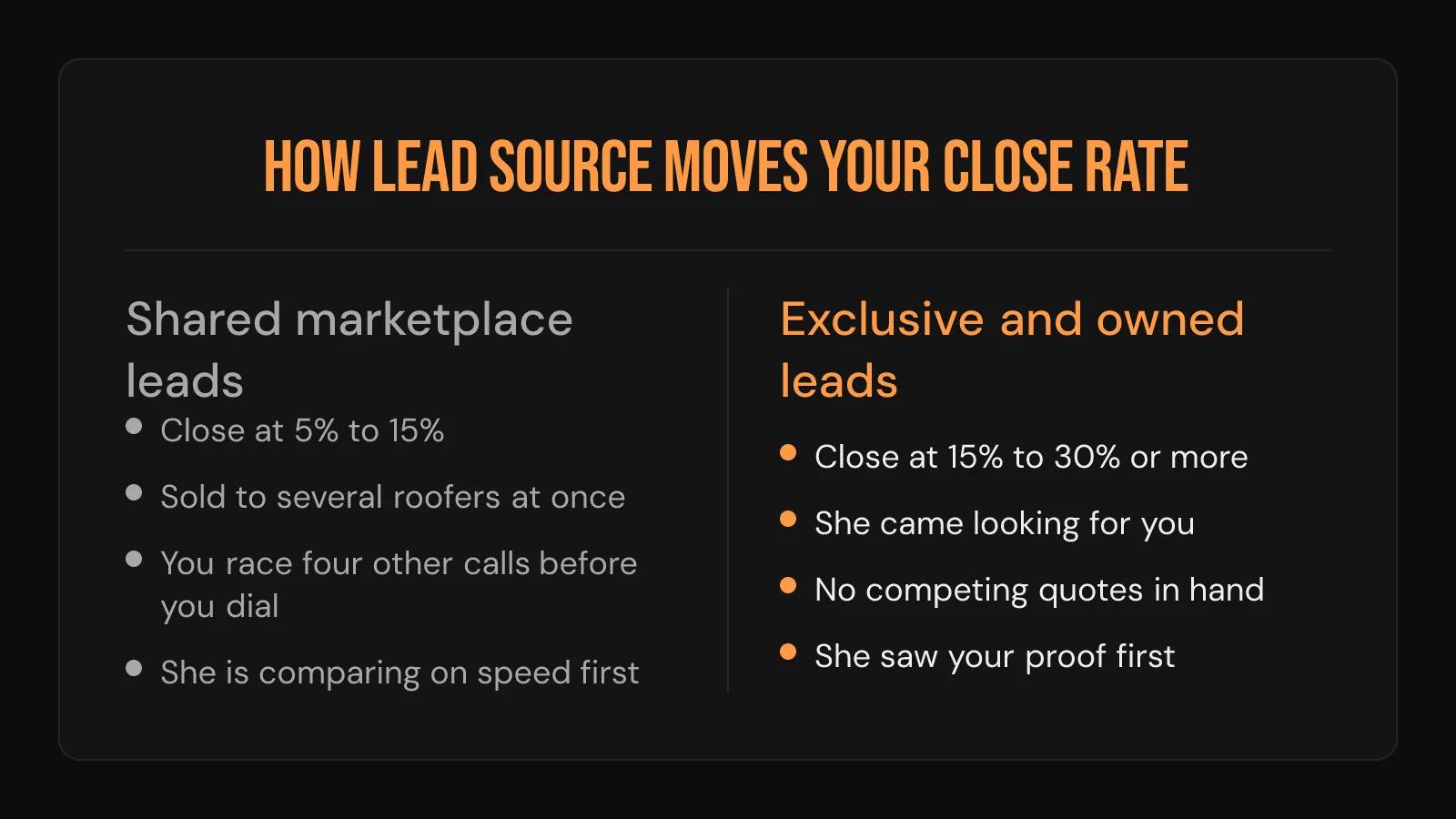
This is the whole case for owning your lead pipeline instead of renting it. The cheapest lead on paper is rarely the cheapest booked job.
The shared-versus-exclusive gap stretches furthest in the first days after a storm, when the same storm damage roofing leads get resold to half a dozen crews in one afternoon. The close-rate math above does not change; the volume of homeowners racing through it does.
How to raise your close rate on roofing leads
Three levers move the average close rate for roofing leads more than anything else, and none of them require buying better leads.
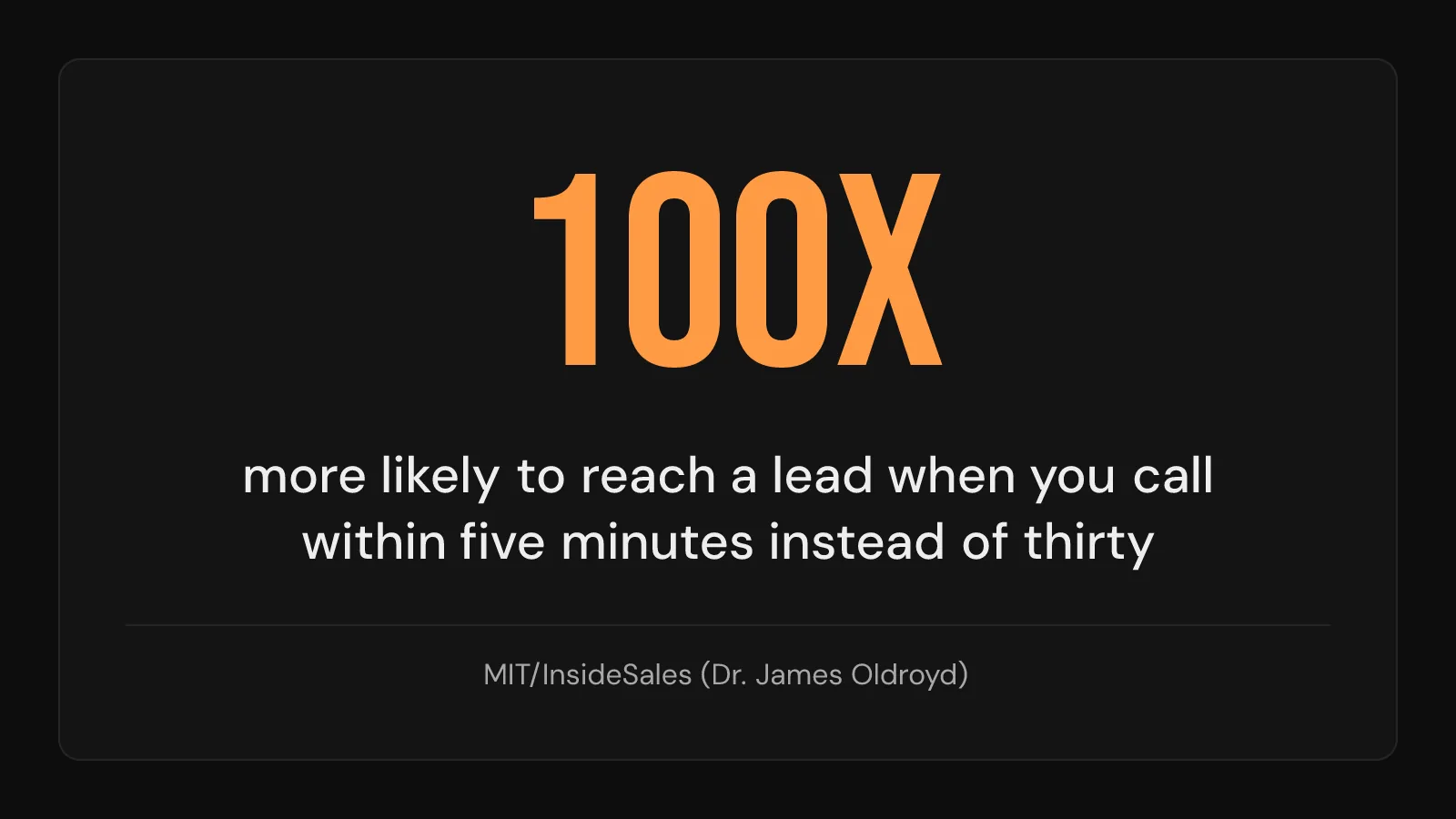
- Respond in five minutes, every time. Call a lead inside five minutes and you are 100x more likely to reach them and 21x more likely to qualify them than if you wait half an hour. Most offices take hours. Speed is the cheapest close-rate lever you have, and almost nobody uses it. See how fast response wins roofing leads.
- Follow up past the fifth try. The 8% who keep following up past the fifth touch end up with 80% of the business. Most roofers quit after one or two calls, so the jobs quietly go to whoever is still in the conversation on day five. Whatever holds that lead also has to prompt the next touch: see what a crm for roofing company actually needs to do once the lead is already logged.
- Put financing on the table. Contractors who offer financing close 17 to 50% more jobs, and the jobs themselves run larger. A homeowner facing a big, unplanned roof bill often balks at the price even when she likes you. Financing turns that sticker shock into a monthly payment she can picture.
Those three are conversion levers, and they compound. Fix your response time and your follow-up together and you often see a bigger jump than either one alone. We go deeper on increasing conversion on the leads you already have if you want the full playbook.
Before you blame the leads themselves, check the parts of your own process that quietly leak jobs:
- How fast does someone actually call a new lead? Measure it in real minutes. "Pretty quick" does not count.
- How many times do you follow up before you give up on a lead?
- Does every after-hours call get a text back within a minute?
- Can a homeowner book a time herself, at night, without waiting for your office to open?
We do not sell leads here. The work is making sure the leads you already get turn into booked jobs. Still deciding whether to buy leads or build your own pipeline? See buy roofing leads vs generate roofing leads for the full side-by-side breakdown. If buying an exclusive source is still on the table, what to check before signing with a roofing lead generation service covers the vetting that keeps a vendor's promised exclusivity honest.
How to calculate your close rate for roofing leads
To track your average close rate for roofing leads, divide the jobs you signed by the qualified leads you actually worked, then multiply by 100. Count only qualified leads. A tire-kicker who was never going to buy should not drag down the number you use to judge your process.
Close rate is one of three numbers worth watching, and they point at different problems when they slip.
| Metric | What it measures | How to read it |
|---|---|---|
| Set rate | Leads that turn into a booked appointment | A low set rate points at slow response and weak follow-up. |
| Sit rate | Appointments where you actually meet and pitch | A low sit rate points at missing confirmations and reminders. |
| Close rate | Qualified leads that become signed jobs | This is the number this whole post is about. |
Frequently Asked Questions
What is a good lead-to-close ratio for roofing?
A good lead-to-close ratio for roofing runs 15% to 27% for most contractors working a healthy mix of leads. Top crews clear 30% or more, while shared marketplace leads often close in the 5% to 15% range. Where you land depends more on lead source and response speed than on raw sales skill.
Is a 50% close rate good for a roofing company?
Yes, a 50% close rate would be strong, well above the 15% to 27% industry average and above what even top crews typically report. One caveat worth knowing: a very high close rate can mean your prices sit too low, so you win almost every bid but leave margin on the table. If you close half your qualified leads at healthy prices, your process is working well.
How much do roofers pay for leads, and does a higher price mean a higher close rate?
Roofers pay very different amounts by channel, and a higher price does not guarantee a higher close rate. Cost per booked job is the number to track: the lead price divided by how often those leads close, so a pricier exclusive lead that closes often can beat a cheap shared lead that rarely does. We break the numbers down in the real cost per booked job.
Why do my roofing leads close at a lower rate than the industry average?
Usually it comes down to three things: the leads are shared rather than exclusive, the first call goes out too slowly, or follow-up stops after a day or two. Any one of those can pull you below the 15% to 27% band. Fixing response time is normally the fastest way to move the number back up.
Can you raise your close rate without buying better leads?
Yes, you can raise your close rate without buying better leads. We do not sell leads, and the gains here come from handling the ones you already get: answer faster, follow up longer, and let the homeowner book herself. Do that and the same lead volume starts producing more signed jobs.