How Can Roofing Companies Acquire the Best Leads?
How can roofing companies acquire the best leads? Start by changing the question from how many to which ones. The best lead is the one that signs, at a job size worth running, without a race to the phone. Where a lead comes from settles most of that before a salesperson ever touches it. A referral and a resold marketplace name behave differently on the phone, even when the same closer works both. This post covers what separates a quality lead from a cheap one, which sources reliably produce the quality kind, and the simple tracking that shows where your signed jobs actually come from.
How can roofing companies acquire the best leads? Define best first
Ask 10 owners where their best jobs came from and most will point at a referral or a repeat customer. The numbers back the instinct. The industry closes 15 to 27% of its leads. Top crews clear 30%. Shared leads from the big marketplaces close at 5 to 15%. Same trucks, same crews, same estimator. The spread comes from the source.
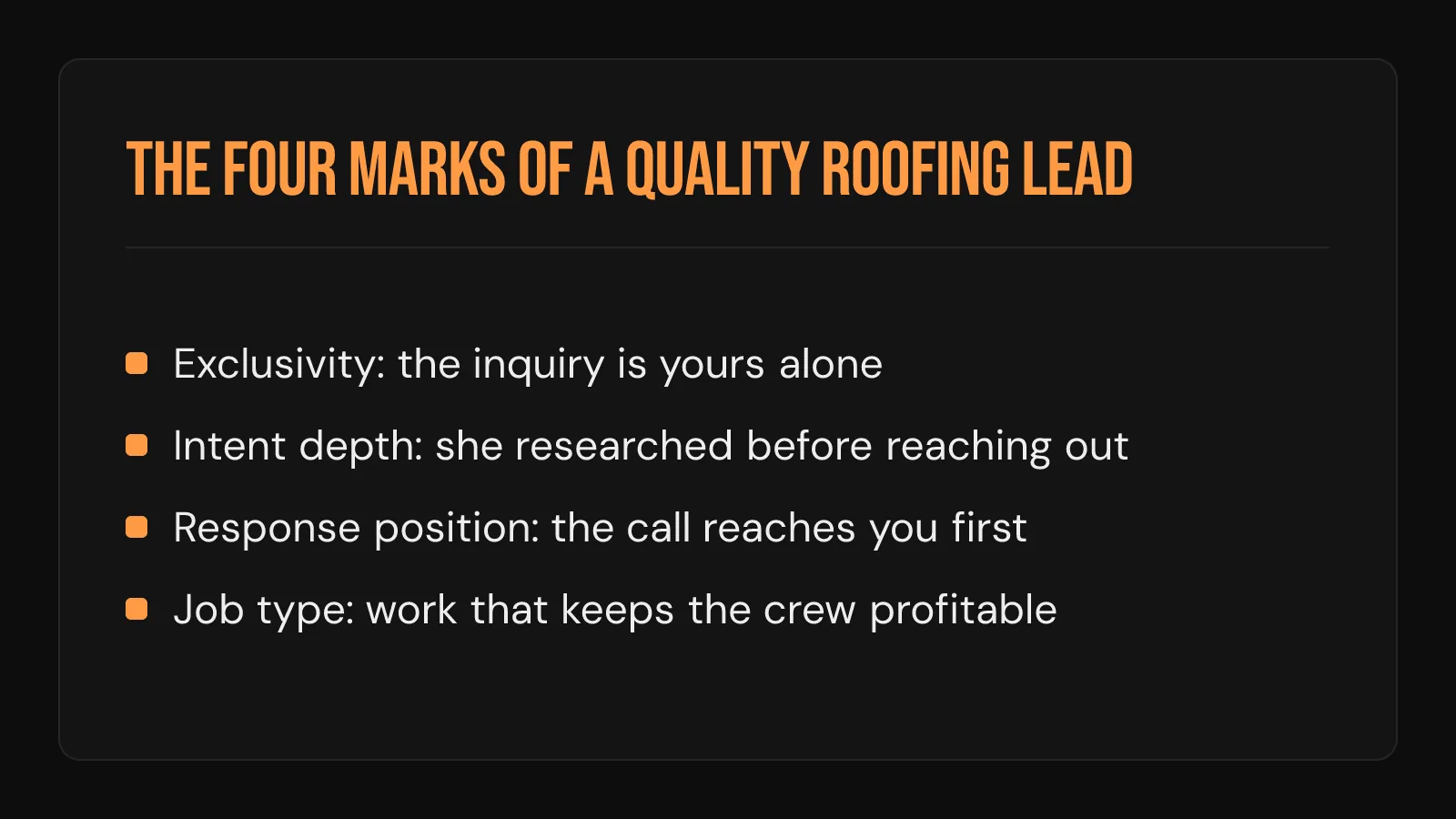
A quality lead carries four marks:
- Exclusivity. You are the only contractor holding the inquiry.
- Intent depth. The homeowner did her research before reaching out. She is past wondering whether the roof needs work and deciding who does it.
- Response-window position. The source delivers the inquiry to you first, or to you alone, while the problem still feels urgent.
- Job type. The inquiry matches the work that keeps your crew profitable, whether that is full replacements or steady repair volume.
A source that carries all four produces jobs. A source that drops three of them produces appointments and gas money. The mechanism underneath that split, and what it does to cycle length and price, is unpacked in why a referral converts differently than a cold lead.
The four marks, source by source
Intent depth is the mark owners underrate most. 92% of homeowners read your reviews before they ever dial your number. An inquiry that arrives after that research behaves differently:
- The call runs shorter, because she already knows who you are.
- Price comes up later, after the roof itself.
- The estimate appointment actually happens.
Position is worth just as much. 62% of homeowners hire the first contractor who answers. A source that hands one name to several crews at once turns that number against you every time it fires. A source that rings your line alone hands you the same number as a head start. The close-rate spread this produces is documented in the close-rate benchmarks by lead source.
| Lead source | Exclusivity | Intent depth | Response-race position | Job-type control |
|---|---|---|---|---|
| Referrals and repeat customers | Yours alone | High. You arrive pre-trusted | First call by default | Follows the work you finished |
| Your website and Google profile | Yours alone | High. She found you on purpose | First and only, if follow-up is fast | Steered by the pages you publish |
| Exclusive purchased leads | Sold once, to you | Mixed. Form intent varies | First, while the window is open | Set by the vendor's filters |
| Shared marketplace leads | Sold to several crews | Low. She is still comparing | A race that starts without you | Whatever the form produced |
The sources at the top of the table hold their marks on their own. The ones at the bottom need a perfect response system just to stay in the conversation.
Where the best-closing roofing leads come from
Referrals and repeat customers sit at the top because trust transfers. The neighbor who vouched for you already answered the homeowner's hardest question, which is whether you will show up and do the work right. How a referral gets handled once it lands still decides the job, but the sale starts warm.
Search inquiries run a close second. A homeowner who found your site or profile compared you against two open tabs and chose to reach out anyway. Nobody sold that inquiry and nobody will resell it. Leads from search presence you own also compound: the pages and reviews that produced this month's calls keep producing next month's.
Exclusive purchased leads sit in the middle. Real intent, sold once, workable when the schedule has holes. Shared marketplace names hold the bottom row for the same reason they look cheap on the rate card: several crews are working one inquiry, and most of the four marks are gone before your phone rings.
How to measure lead quality: source-to-close tracking
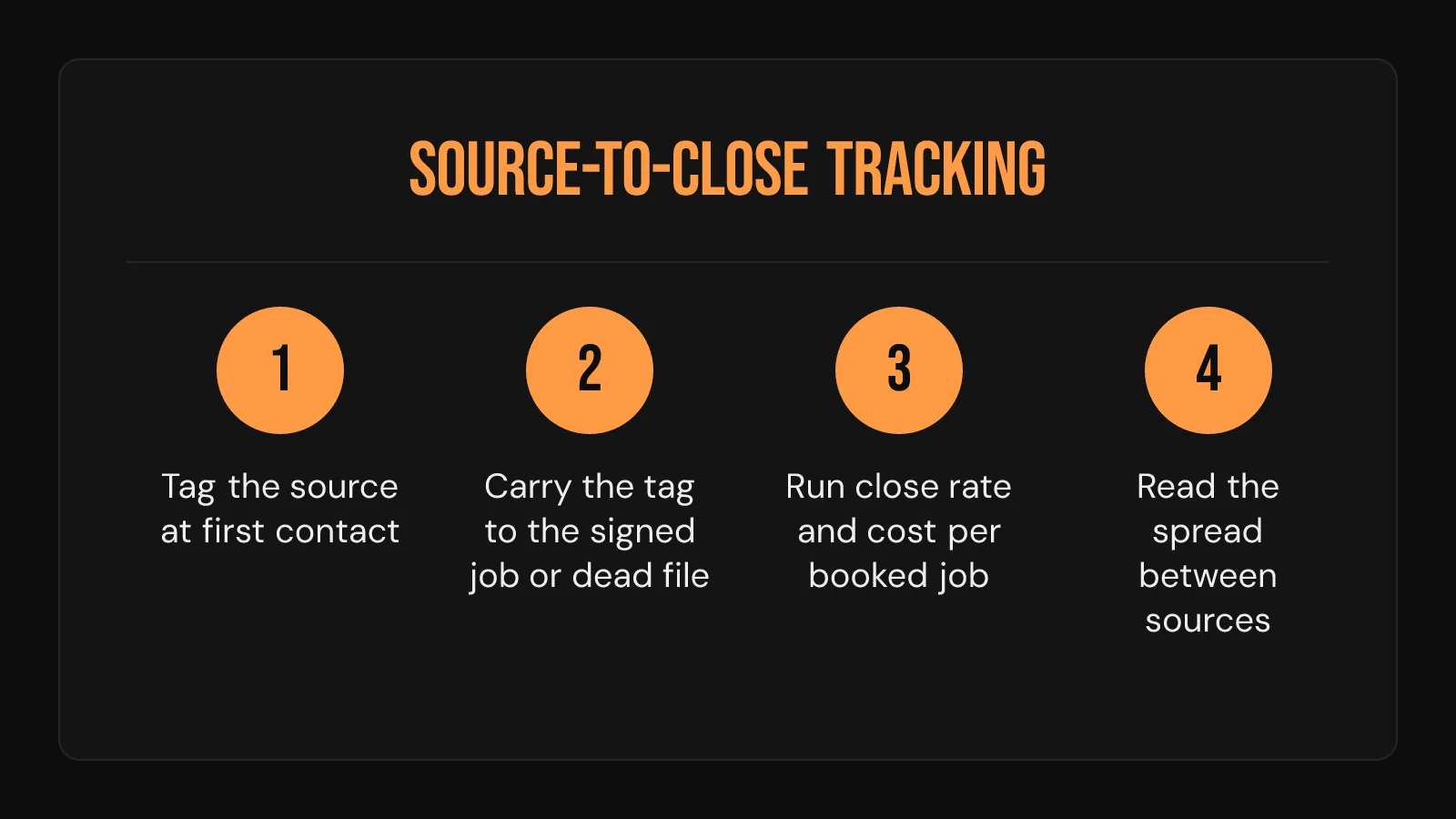
Gut feel about sources is usually half right. The referral instinct holds up. The instinct about which paid source earns its invoice rarely survives the arithmetic. Four steps put real numbers under it:
- Tag the source at first contact. Every inquiry gets a source written down the day it arrives: referral, site form, profile call, vendor name. Nothing enters the pipeline untagged.
- Carry the tag to the outcome. The tag rides through estimate, follow-up, and signed contract or dead file. A tag that dies at the estimate stage will flatter whichever source books the most appointments.
- Run the math after 60 to 90 days. For each source, divide jobs signed by leads received. Then divide what the source cost by the jobs it signed. The cost per booked job math is the second half of that read.
- Read the spread, source against source. One source at double another's close rate is a louder signal than any single month's totals.
| Column in the sheet | What to record |
|---|---|
| Source | Where the inquiry came from, tagged the day it arrives |
| Leads in | Every inquiry from that source, including the ones that went quiet |
| Jobs signed | Contracts only. Estimates flatter weak sources |
| Close rate | Jobs signed divided by leads in |
| Cost per booked job | What the source cost for the period, divided by jobs signed |
The spread between sources is the decision: it names the source that deserves the next dollar and the source that has been billing you for appointments. Run it for a full quarter, because storm weeks and slow weeks both lie in small samples. The sheet earns its keep the first time it contradicts the gut feel. Local rules widen it too: roofing leads in Nashville face two license tiers first.
Shifting the mix: how roofing companies acquire best leads over time
So how can roofing companies acquire the best leads? Feed the sources the sheet already vouches for:
- Ask for the referral in the week the job wraps, while the neighbors can still see the crew's work from the street.
- Move budget toward the site, profile, and reviews behind a lead pipeline you own. Owned sources hold all four quality marks and get cheaper with every job they produce.
- Keep one bought source as a bridge if the calendar needs it, and hold it to the same sheet as everything else.
The trade-offs between renting volume and building your own flow run deeper than one section, and the full buy versus generate comparison walks both sides with real numbers.
One scope note belongs here. The Trust Process does not sell leads, and it does not broker or guarantee them. The engagement builds the assets that make owned sources produce: the site, the search presence, the Google profile, and follow-up that answers while an inquiry is still warm.
Frequently Asked Questions
Which lead source gives a roofing company the best close rate?
Referrals close best because they carry all four quality marks at once, and inquiries from a website and profile you control sit right behind them. A shared marketplace name gives up exclusivity and position before the first call is even made. Where each source lands for your own crew is exactly what a quarter on the tracking sheet settles.
Is paying extra for exclusive roofing leads worth it?
Paying extra for exclusivity is usually worth it when the alternative is a shared name, because the premium buys position: the inquiry rings your line while the problem is still urgent. Judge the premium the way you judge every source, by what a signed job costs after 60 to 90 days on the sheet.
How can a small roofing crew track lead quality without new software?
A small crew can track lead quality with a whiteboard or a one-tab spreadsheet. The habit is two entries per inquiry: the source when it arrives, the outcome when it signs or dies. The software question only matters after the habit exists.
I tried tracking my lead sources once and gave up, so why would it work now?
Tracking usually gets abandoned because it stopped at appointments booked, which makes every source look similar. Carry each tag to the signed contract and the sources separate fast. The other half is acting on it: move real budget each quarter toward the sources the sheet says close.
Does The Trust Process sell the best roofing leads?
No. The Trust Process does not sell roofing leads, and it does not broker or guarantee them either. The paid work covers rebuilding the website, SEO, content, CRO, Google Business Profile upkeep, SMS nurturing that runs the follow-up for you, and a voice agent for inbound calls, sold separately or together, all aimed at making the sources you already own produce more.