Client Segmentation for Roofing Marketing: A Practical Guide
Client segmentation for roofing marketing means grouping the people you market to so a homeowner replacing a 20-year-old roof and a property manager pricing a commercial re-roof never get the same message or the same wait for a callback. Most roofing companies skip this step. Every lead hits the same inbox, waits the same amount of time, and hears the same pitch. That treats a big insurance restoration the same as a small cash repair, and a warm referral the same as a cold form fill. This guide covers the segments your roofing company already has, why one message for all of them leaves money on the table, and how to sort your clients without buying new software.
What Client Segmentation for Roofing Marketing Actually Means
Client segmentation for roofing marketing is the practice of splitting your prospects and past customers into a few clear groups, then matching your effort and your message to each group. A segment is any set of clients who behave alike:
- the same reason for calling
- the same job size
- the same way of finding you
You already sense these groups on the phone. Segmentation just writes them down so your whole team treats each one the same way every time.
The real point is priority. You have limited hours and a limited budget. Segmentation tells you which clients earn a five-minute callback and a page written for them, and which ones can wait. It turns a vague sense that some leads are better than others into a short list you can act on Monday morning.
The Client Segments That Actually Matter for a Roofing Company
Most roofing companies have four segments hiding in their lead list. You do not need all four. Pick the two or three that drive most of your revenue and start there.
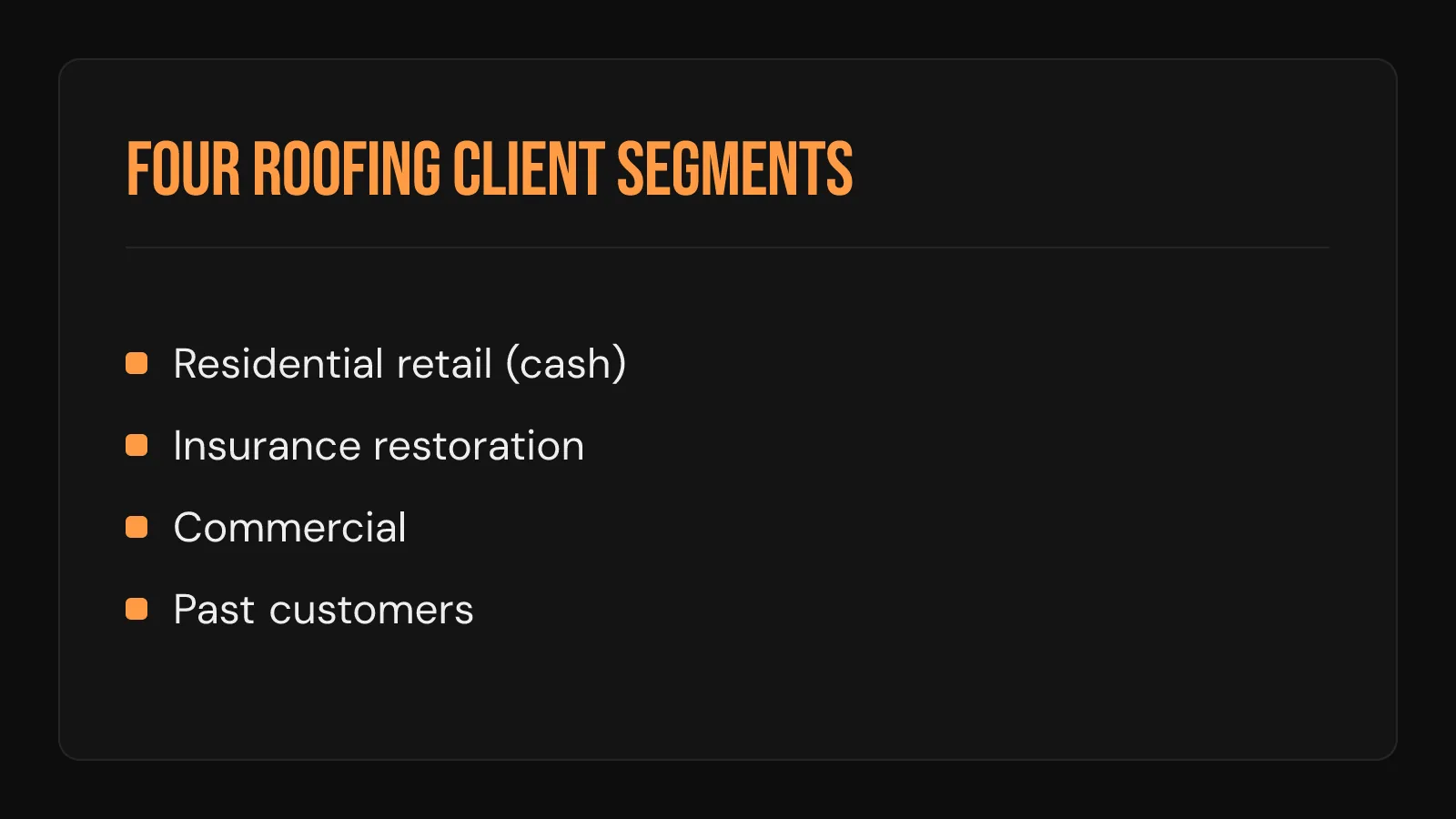
Job value is the fastest way to rank them. An average residential asphalt replacement runs $9,500 to $11,500, and insurance restoration jobs run $12,000 to $15,000. A small repair might bring a few hundred. When one segment is worth many times more than another, it earns many times the attention.
| Segment | What they care about | Typical job value | How they find you |
|---|---|---|---|
| Residential retail (cash) | Price, financing, trust | $9,500 to $11,500 | Referrals, Google, your website |
| Insurance restoration | Help through the claim, speed | $12,000 to $15,000 | Referrals, claim-time searches |
| Commercial | Bid process, references, timeline | Highest and slowest to close | Search, direct outreach |
| Past customers | Being remembered, easy rebooking | Repeat and referral revenue | Your own follow-up |
The residential and commercial segments barely overlap. A property manager comparing bids on a flat roof needs references and a timeline. A homeowner needs financing and reassurance. The deep dive on how to find commercial roofing leads covers the commercial side, and the specifics of the insurance segment sit in getting roofing leads from insurance companies honestly.
Why One Message for Every Client Leaves Jobs on the Table
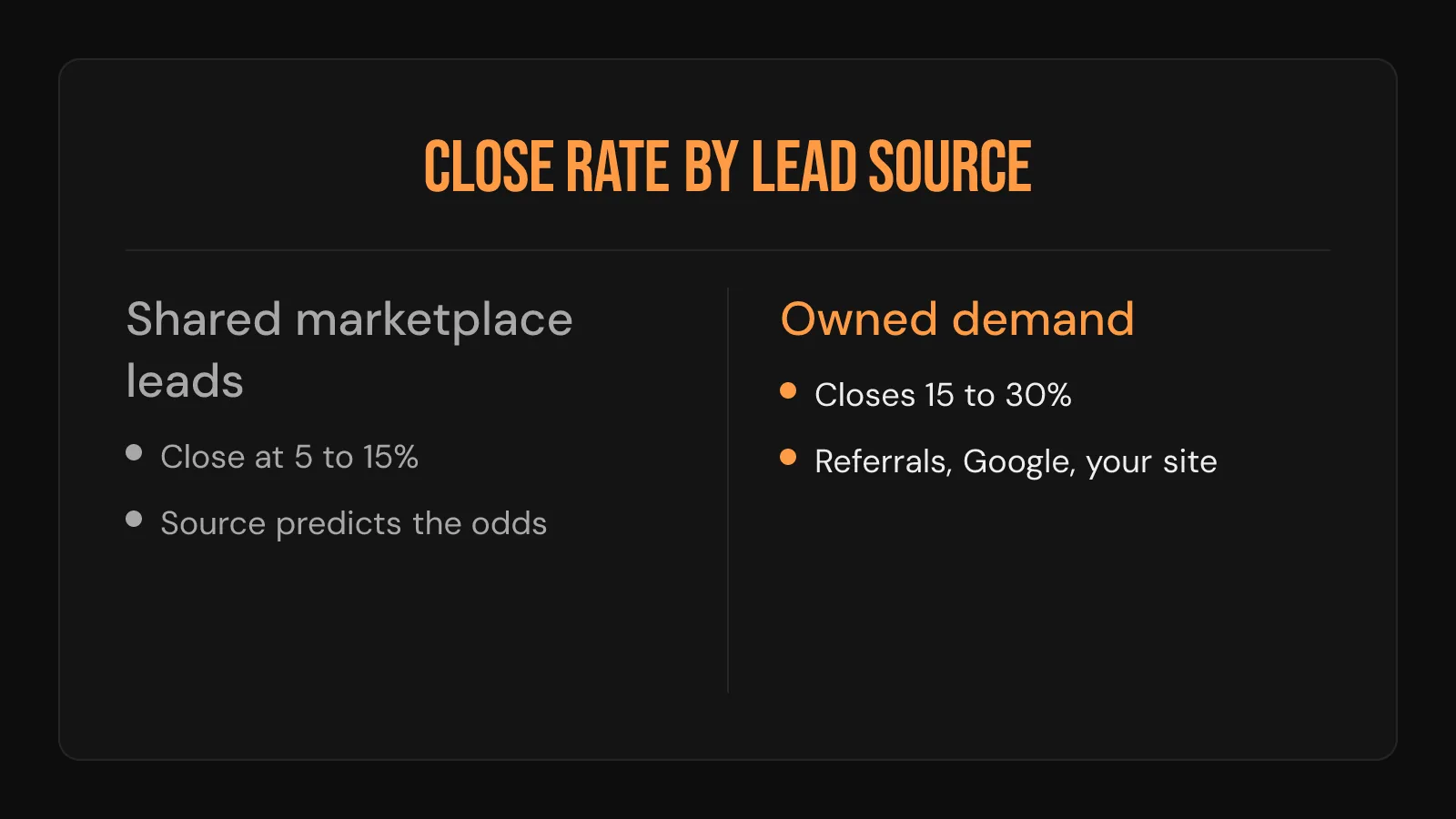
Treating every lead the same has a measurable cost. A lead's source predicts its close rate before anyone picks up the phone.
| Lead type | Typical close rate |
|---|---|
| Industry average | 15 to 27% |
| Top crews | 30% |
| Shared marketplace leads | 5 to 15% |
Shared leads from the big marketplaces close at 5 to 15%, while an owned pipeline of referrals and search closes far higher. Source alone can halve your odds, which means a lead's segment predicts the outcome before anyone answers.
Speed decides the rest. According to LeadAngel, 78% of homeowners go with the first company that responds, so your highest-value segment is the one that should never sit in a queue. When two bids are close, 67% of homeowners say communication quality makes the decision, so the message each segment hears matters as much as the speed.
Your best segment deserves your fastest response, every single time. A generic auto-reply blasted to everyone wastes the one advantage segmentation gives you: knowing who to call back first. A second axis cuts across all four segments: sorting the same leads by how fast they need you separates an urgent leak call from a planned replacement, and the two want different response defaults even inside one segment.
How to Segment Your Roofing Clients Without New Software
You do not need a CRM to start. The customer list you already have, in your invoicing tool or even a notebook, holds everything you need. Sorting it into segments takes an afternoon.
- Export your last 50 jobs. Pull them into a spreadsheet with columns for job type, job value, and how the client found you.
- Tag each row by segment. Residential retail, insurance restoration, commercial, or repeat customer. Most jobs fall into one cleanly.
- Find your top two segments by revenue. Add up the value in each group. Two segments usually produce the bulk of the money.
- Write down how each one found you. That tells you where to spend your next marketing hour and which page on your site each segment should land on.
That is the whole system. A spreadsheet beats an expensive tool you never open. Once the top segments are clear, the rest of your marketing for roofing contractors can point at the clients worth the most.
Matching Response and Follow-Up to Each Segment
Segments only pay off when your response changes to fit them. This is where segmentation meets the work that actually books jobs: fast response, follow-up that survives past Day 2, and a site that speaks to the specific person reading it. Getting found in the first place looks different too. Roofing SEO for B2B and commercial owners covers what changes in search when the buyer is a business instead of a homeowner.
Here is how response should differ by segment:
- Insurance restoration: answer live and move fast, since the homeowner is often mid-claim and comparing crews the same week.
- Commercial: reply with references and a clear timeline, because a property manager is running a bid process instead of an emergency.
- Residential retail: lead with financing options and real project photos, the two things a cash-paying homeowner weighs most.
- Past customers: reach out first, before they search, since a repeat job or a referral costs almost nothing to earn.
The through-line is roofing leads that actually close: the right response reaching the right segment quickly. Contractors chasing commercial roofing leads run an entirely different play from crews handling residential claims, and segmentation is what tells the two apart.
Where Segmentation Stops: An Honest Take
Segmentation has a limit, and it is worth being straight about it. The Trust Process does not:
- run ad campaigns or buy media
- send email newsletters or promotional blasts
- sell, broker, or guarantee lead lists
So the version of segmentation that means building custom ad audiences or blasting a segmented email list is outside what happens here.
Segmentation changes how you handle the leads you already get. It decides who you call back first, how your follow-up reads for each group, and which trust signals your site puts in front of a given homeowner. That work sits inside conversion and follow-up, the lane that turns existing demand into booked jobs. If your problem is too few leads rather than lost ones, segmentation helps less than fixing the top of your funnel first. Done right, client segmentation for roofing marketing comes down to attention: pointing your best, fastest effort at the clients most likely to sign.
Frequently Asked Questions
How does client segmentation change the best way to market a roofing company?
Client segmentation changes the best way to market a roofing company by pointing your time and budget at the segments that close highest and pay most. The offer matches the group: financing for cash homeowners, references and timelines for commercial buyers. The channels stay yours to run, and segmentation tells you which clients each one should target.
How does segmenting commercial versus residential clients change how you find customers?
Segmenting commercial versus residential clients changes how you find customers because the two groups look for you in completely different places. Residential homeowners come from referrals, Google, and your website, while commercial buyers come from search, direct outreach, and a bid process. Chasing both with one approach wastes effort on the channels each group ignores.
Which client segments should a roofing company prioritize first?
A roofing company should prioritize the segments with the highest job value and the fastest path to a signed contract, usually insurance restoration and repeat customers. An owner wearing four to six hats cannot work every segment at once, so starting with the two that drive most of the revenue protects the limited hours you have. The rest can wait until those two run smoothly. A metal reroof often lands in that highest-value tier too, since it moves slower and prices higher than a standard asphalt job, a profile covered on its own by metal roofing leads.
Do I need special software or a CRM to segment my roofing clients?
You do not need special software or a CRM to segment your roofing clients. A spreadsheet with your last 50 jobs, tagged by job type and value, does the job for most companies. Buy a tool later, once the segments are clear and you know exactly what you need it to do.
Is client segmentation worth it for a small roofing company with a tight budget?
Client segmentation is worth it for a small roofing company with a tight budget precisely because the budget is tight. When every marketing dollar has to count, knowing which clients close highest keeps you from spending the same on a segment that rarely signs. It costs an afternoon with a spreadsheet and pays back the first time you call your best lead first.