Roofing Sales Lead Management: The Process After the Call
Roofing sales lead management is the work of moving a homeowner's inquiry through a pipeline, from the moment it lands to the moment it becomes a signed job or a closed file. The process lives between the software that stores each record and the channel that produced the inquiry in the first place: who owns a lead at each stage, how long it sits before someone acts, and what happens to the ones that stop answering the phone.

What roofing sales lead management actually covers
Most roofing companies can name their lead sources without hesitation: referrals, a Google Business Profile, a paid campaign, a canvassing crew. Which of those sources sends the leads most likely to sign is covered in how roofing companies acquire the best leads by source, and the pipeline below takes over after the inquiry lands. Far fewer can name the stages a lead actually moves through once it lands, which is the first gap this discipline is built to close. A workable pipeline needs a small, fixed set of stages, the kind that survives a busy week without anyone improvising a new status column:
- New. The inquiry just arrived and nobody has touched it yet.
- Contacted. Someone reached the homeowner, by phone or text, and logged what she said.
- Estimate scheduled. A date and time are on the calendar.
- Estimate sent. The number is in her hands and she is deciding.
- Negotiating. She has questions, a competing bid, or a financing ask on the table.
- Won or lost. The file closes on record, every time, one way or the other.
Six stages is usually enough. A pipeline with fifteen stages reads like precision it does not actually deliver, since most of the extra stages just describe the same waiting differently. This stays separate from the first five minutes, which is the speed problem already solved before a lead ever reaches a stage at all.
Who owns a lead once it is in the pipeline
A stage model only works if someone is responsible for moving a lead out of it. The most common failure in roofing sales lead management shows up before any follow-up script gets used: a lead sitting in a shared inbox or a group text where three people can see it and nobody is the one who has to act. Three out of every 10 leads never hear back from anyone. A lead nobody owns is one way that happens: everyone assumed someone else was handling it.
A lead with no real owner usually shows the same handful of signs:
- Multiple people can see it, but nobody's name is attached to it
- The last logged activity is a form submission, with no call or text after it
- Two people each assumed the other one was calling
- It shows up in a weekly export, but nobody works it day to day
| Pattern | What happens to the lead | Who notices when it stalls |
|---|---|---|
| Owned lead | One named person is responsible from New through Won or Lost | The owner, because it shows up on their list every day |
| Unowned lead | The lead sits in a shared queue anyone could act on | Nobody, until the homeowner calls someone else |
Assigning ownership at the moment a lead enters the pipeline, before the first call ever happens, is the single change that closes this gap fastest. The fix is a rule that works with whatever software is already in place: every new lead gets one name attached to it within the same business day, and that name stays fixed until a handoff both people log. Whatever CRM or spreadsheet already holds the record, the follow-up work behind any CRM runs the same way on top of it.
A follow-up cadence built around pipeline stages
A calendar-based cadence (call today, text tomorrow, email in three days) assumes every lead moves at the same speed. This works better measured against the stage a lead is actually sitting in, because a lead stuck in Estimate Sent for two weeks needs a different next move than one that just arrived an hour ago. There is no universal clock for this. A starting point looks something like the table below, adjusted to how fast estimates and decisions typically move for your own crew:
| Stage | Example flag point, adjust to your crew | Next action if the clock runs out |
|---|---|---|
| New | Same business day | Escalate to the pipeline owner's manager |
| Contacted | 3 days with no scheduled estimate | A second call attempt plus a text |
| Estimate sent | 7 days with no response | A check-in call about the decision, separate from the estimate itself |
| Negotiating | 10 days with no decision | A direct question about what is still standing in the way |
44% of salespeople give up after a single follow-up. A stage-based clock is built to catch that moment, before a file gets closed while a real decision is still pending. The 8% who keep following up past the fifth touch end up with 80% of the business. Tying the clock to the actual stage is what keeps that fifth touch from getting skipped. The channel-by-channel cadence that runs inside each stage above lives in the channel-by-channel follow-up cadence. The clock tightens further in markets where demand arrives in weather-driven bursts: lead generation for roofing contractors in New York shows how much of a season's pipeline can land inside a few short windows.
Stalled versus slow
Not every lead sitting in the same stage for a while is a problem. A slow lead is still moving through expected touches on schedule; a stalled lead has exceeded its stage's time limit with no next action logged anywhere. Telling the two apart is the real skill here. The stage names alone will not teach it.
- A homeowner waiting on an insurance adjuster's decision before scheduling an estimate is slow. The next touch is already scheduled around a real external date.
- A lead with no logged call, text, or note in over a week, with nobody able to say what happened last, is stalled.
- A homeowner who said she is comparing two other bids and asked for two weeks is slow, as long as the follow-up on day 14 is already on the calendar.
- A lead that has moved backward, from Negotiating back to Contacted, with no note explaining why, is stalled.
What to do with a lead that has gone quiet
Not every stalled lead comes back with one more call. At some point the honest move is a formal close: log a reason, stop the outreach, and free the pipeline view to show only the leads someone is actually working. Where the lead came from is worth weighing before that call, since a referred inquiry and a cold one behave differently at every stage above.
- Taper the outreach. Move from calls to a single text or email, spaced further apart, once two or three real attempts have gone unanswered.
- Send one direct message that names the silence and asks a plain question: is the project still happening, or has the timing changed.
- If that message goes unanswered too, send a single breakup message and close the file. A well-timed breakup email gets a response about a third of the time. Send it exactly once, and skip a repeat attempt if it goes unanswered.
- Log the close with a reason. "No response after breakup" is different information than "chose another contractor," and only one of those tells you anything about your process.
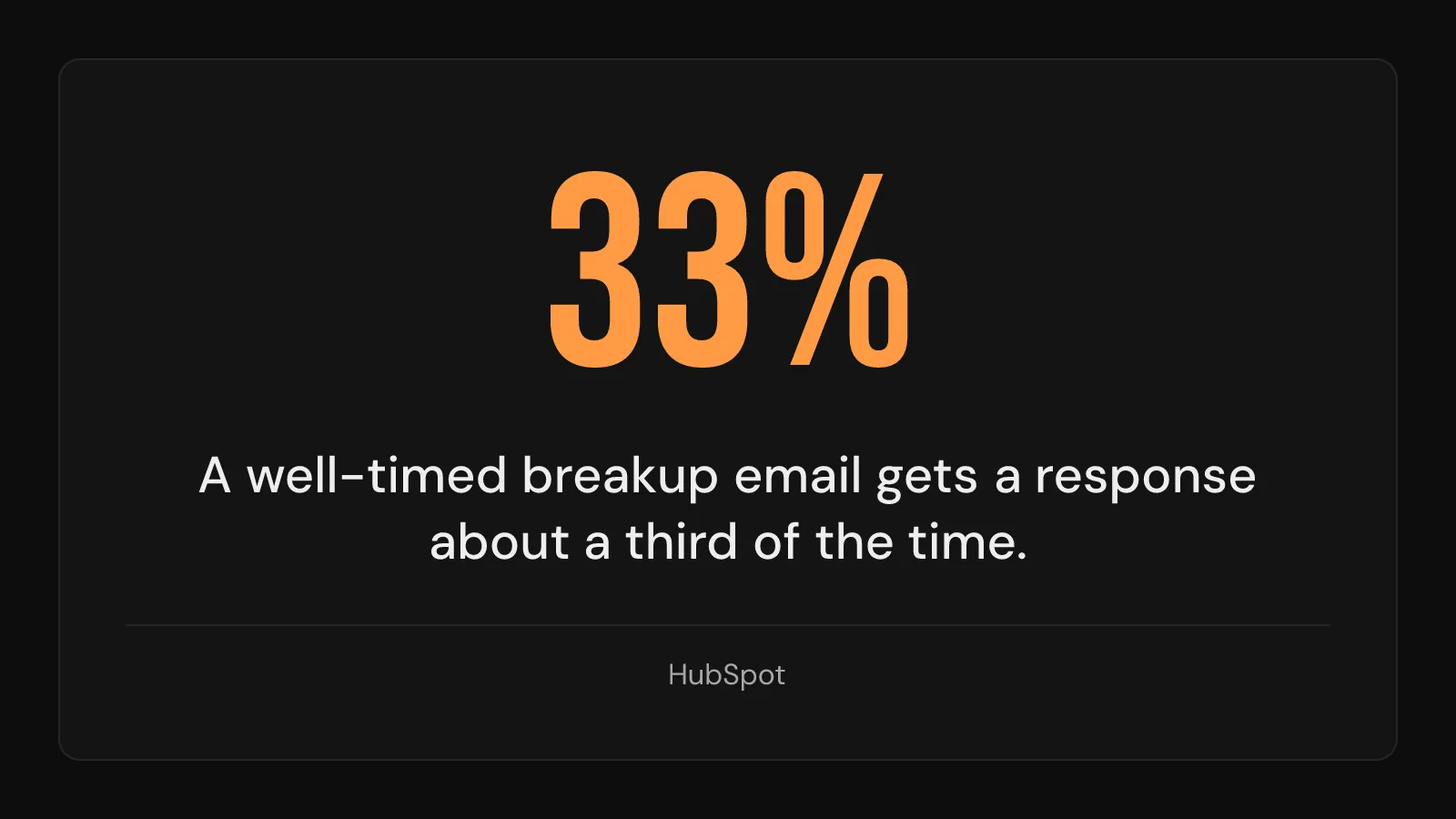
A roofing sales leads management process that skips the formal close ends up with a pipeline that looks busier than it is, full of leads nobody is actually working and nobody has declared lost either.
A pipeline stage, an ownership rule, and a stalled-versus-slow test all work the same whether the record lives on a whiteboard or inside a paid platform.
Building an owned lead pipeline still starts with the source, and once a lead is inside that pipeline, the close-rate benchmarks show what is at stake when the stage-by-stage discipline above slips.
Frequently Asked Questions
What is roofing sales lead management?
It is the process of moving a homeowner's inquiry through a defined set of pipeline stages, from first contact to a signed job or a formally closed file. It covers who owns a lead at each stage, how long a lead can sit before it is flagged, and what happens to leads that stop responding. It is separate from the CRM or spreadsheet that stores the record, and separate from the channel that produced the lead in the first place.
Who should own a lead once it's in the roofing sales pipeline?
One named person, assigned the same business day the lead arrives, and responsible for it from New through Won or Lost. A lead sitting in a shared inbox where several people could act on it usually means nobody does, until the homeowner calls someone else instead.
How do you tell if a roofing sales pipeline is stalled or just slow?
A slow lead still has its next touch scheduled, even if that touch is weeks out, tied to a real reason like an insurance decision. A stalled lead has no logged call, text, or note past its stage's time limit, and nobody can say what happened last. A scheduled next touch is the actual test, separate from how many calendar days have passed.
Should a roofing company ever stop following up on a lead?
Yes. A lead that has gone unanswered through a tapering outreach sequence and one direct breakup message should be formally closed, with a reason logged. An open file with no real activity just hides which leads still need real attention, and a well-timed breakup email still gets a response about a third of the time before that close happens.