Creative Roofing Marketing Ideas Beyond Stock Photos and Ads
Creative roofing marketing gets sold as something flashy: an inflatable mascot, a viral stunt, a rebrand nobody asked for. The plays that actually work for roofing companies are smaller and cheaper. Real job photos instead of stock images. A Google Business Profile treated like a running portfolio. Review requests that people actually finish. None of it costs much, and none of it is complicated to start, but follow-through decides whether any of it pays off: a campaign that gets the phone to ring still loses the job if nobody answers fast enough. This piece breaks down five specific, low-cost creative roofing marketing plays contractors are running right now, what each one costs in time or money, and where the follow-up has to pick up the slack.
What Creative Roofing Marketing Actually Looks Like
Gimmick creative and tactic creative get lumped together, which wastes a budget fast. A mascot costume might get attention for a day, but nobody tracks whether it produced an estimate. That measurement gap shows up industry-wide, and the broader roofing industry marketing statistics and challenges explain why so many budgets go untracked this way.
| Gimmick creative | Tactic creative | |
|---|---|---|
| Example | Mascot costume, viral stunt | Real job photos, GBP updates, review asks |
| Cost | One-time production spend | Mostly time, built into work already happening |
| Measurable? | Rarely tracked past a "like" count | Ties directly to calls, clicks, or reviews |
The plays below all sit in the tactic-creative column. Five categories make up creative roofing marketing done well:
- Real job photos and video instead of stock content
- A Google Business Profile treated like an ongoing portfolio instead of a set-and-forget listing
- Review generation built into the creative work itself instead of bolted on afterward
- Local partnerships and neighborhood-specific plays
- Referral incentives with a twist worth talking about
Roofing Webmasters found that 98% of the content on roofing websites gets zero traffic, most of it generic posts built to check a box. Creative roofing marketing only earns the name when it beats the broader channel menu in our roofing marketing ideas breakdown.
Real Job Photos and Video Beat Stock Content
Every roofing website leans on the same stock photo: a blue roof against a clean sky, no ladder, no crew, no dust. Homeowners have seen it a hundred times, and it tells them nothing about the company behind it.
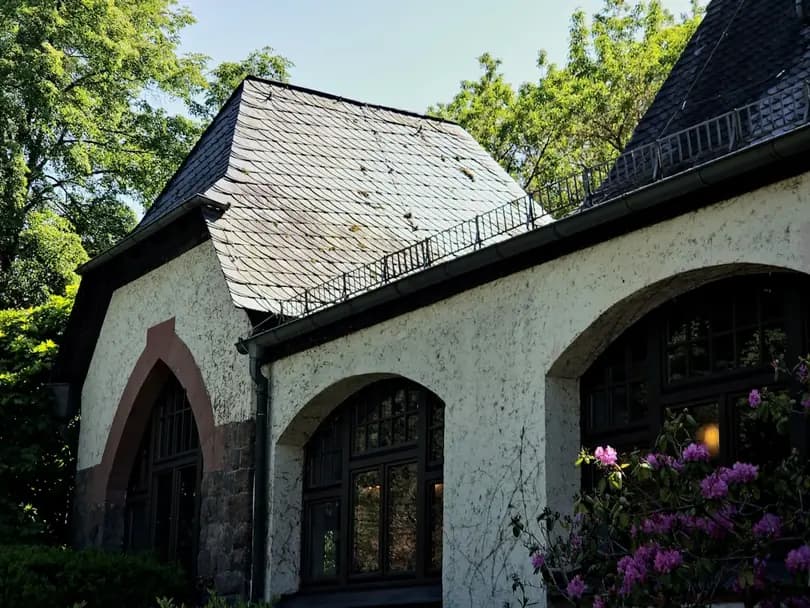
JobNimbus Marketing found that real project photos convert 37% better than stock photography on a roofing site. The fix costs nothing but a habit change: 10 phone photos per job, a before shot, a mid-tear-off shot, and a finished shot with the truck in frame.
| Content type | Cost | What it actually proves |
|---|---|---|
| Stock photography | Free to low | Nothing specific to this company |
| Crew phone photos | Free, time only | A real job, a real crew, a real result |
| Short video (tear-off or timelapse) | Low, editing time | The work itself, hard to fake |
A blurry real photo still beats a perfect stock one, because it proves the company actually does the work it claims. Our roofing company video marketing breakdown covers turning that footage into short clips.
Turn the Google Business Profile Into a Visual Portfolio
Most roofing companies set up a Google Business Profile once and barely touch it again. That is the easiest creative play to fix, and it costs nothing.
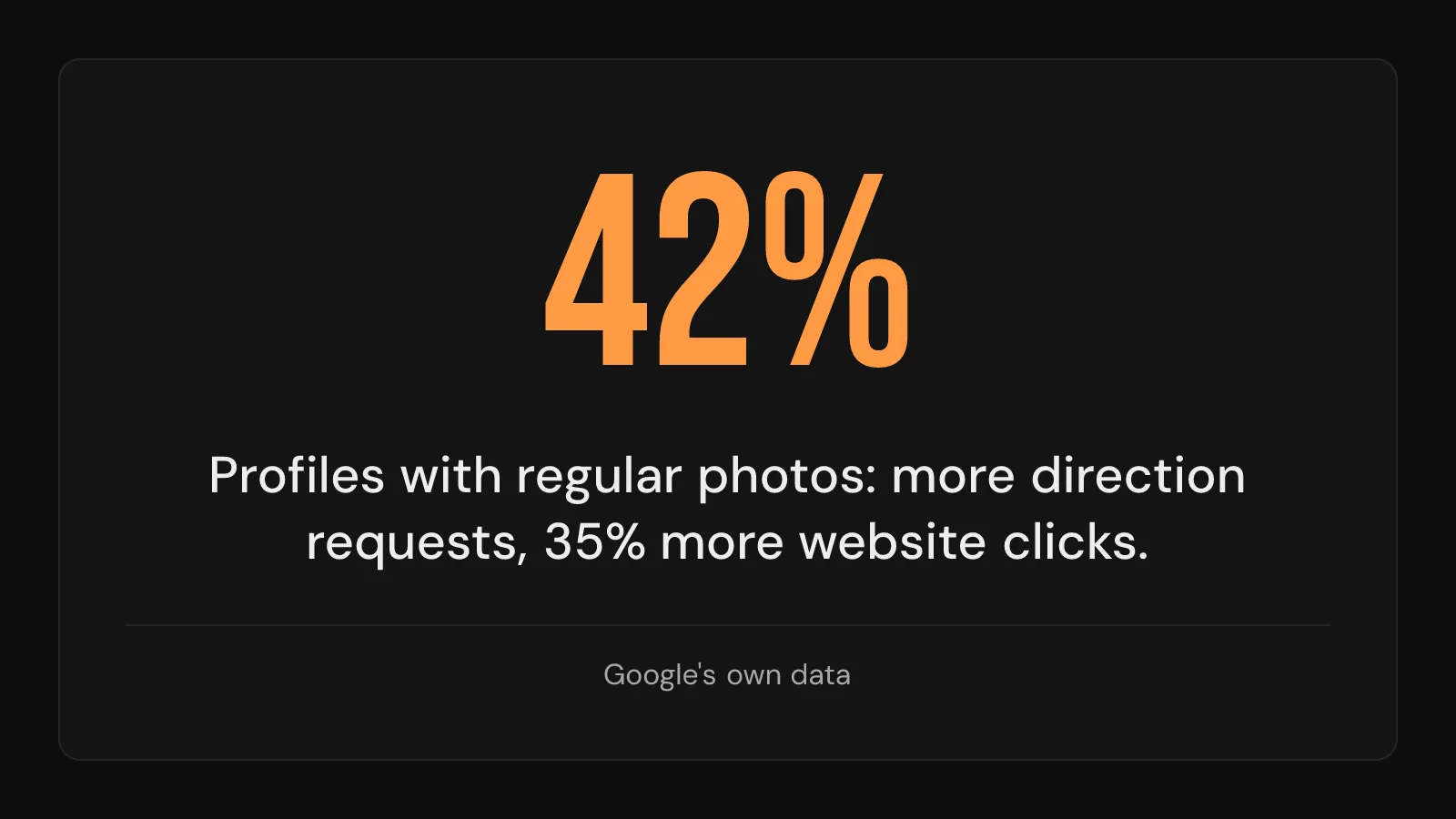
Google's own numbers: profiles with photos get 42% more direction requests and 35% more website clicks. A profile updated weekly with a real job photo or a quick answer reads as an active business. One untouched since setup reads like a dead listing, even with the crew booked solid.
Three habits keep a profile working as a portfolio instead of a listing:
- Post a photo from every completed job within a day or two instead of saving them for a quarterly batch upload
- Answer the Q&A section before a stranger fills it with a wrong answer
- Update service areas and hours the moment either one changes
The only real cost is a habit: whoever is already on the job site has to open an app for 30 seconds. Keeping the name, photos, and hours the same across the profile and the website is its own discipline, and how the name, truck, and profile stay consistent as a single roofing brand covers that side of it in full.
Make Review Generation Part of the Creative Work
Review generation is usually an afterthought: a generic text sent weeks after the job, easy to ignore. Building it into the creative work itself gets a different response.
TTP's research compilation puts it plainly: 55% of consumers pick the company with many solid reviews over the one with a handful of perfect ones. Volume and recency beat a flawless average, so the goal is a steady stream of reviews rather than one perfect push.
A few creative twists make the ask itself memorable:
- A QR code on the yard sign or truck wrap that goes straight to the review page instead of a search
- A short video-testimonial ask on the last day of the job, while the homeowner is still looking at the finished roof
- A text-to-review flow that fires the same day the final invoice goes out
Timing matters more than the script. A homeowner asked while admiring a clean job site says yes far more often than one texted three weeks later.
Local Partnerships and Neighborhood-Specific Plays
Some of the best creative plays happen at the neighborhood level, where a roofing company has an advantage no national brand can buy: it is actually local.
Three partnership plays are worth testing first, in this order:
- Ask a realtor or insurance agent for a standing referral relationship. Both send homeowners who need a roof at a predictable moment: a home sale inspection or a claim.
- Run a yard-sign push tied to a real finished job instead of a generic ad sign. A sign that reads "Just finished on Maple Street" reads differently than a company logo alone. A small mailing to the same nearby streets can back it up; what to put on it and how to target it covers the same trigger-based approach.
- Sponsor a local team or event where the crew shows up in person. A logo on a jersey does less than a foreman handing out water at a Little League game.
All three plays run on time and initiative rather than a budget: someone has to make the ask, show up, or hand out the sign.
Storm season turns the yard-sign play into the strongest one on this list. A sign reading "Just finished on Maple Street" after a hailstorm does more work than any of the other three plays combined, because every neighbor on that street is already looking at their own roof. What else needs to be staged before that specific week arrives covers the budget and the answering system running behind the sign.
Why Creative Marketing Still Needs a Fast Follow-Up System
Every play above earns attention, but none of them close a job alone. The homeowner still has to reach a live person fast, or the attention goes nowhere.
Creative marketing gets the phone to ring. What happens in the next five minutes decides whether it becomes a job. That is the same math behind the roofing leads pipeline these campaigns are supposed to fill: a clever campaign with a slow callback still loses to a boring one with a fast callback.
Contractors who want help building and running plays like these, instead of squeezing them in between jobs, usually talk to roofing digital marketing experts who can build these campaigns.
Frequently Asked Questions
What's the most creative way to market a roofing company beyond the standard channels?
Real, unedited job photos and video usually beat anything scripted, because they prove the crew does the work instead of just claiming to. Pairing that with an active Google Business Profile and a deliberate review-generation habit covers most of what "creative" means here, no mascot required.
What are the most effective creative inbound marketing tactics for a roofing company?
The tactics that work best pull a homeowner toward the company rather than chase them down: real job content on the profile, a steady pace of reviews, and a referral network that already leans warm. All three keep working after the initial effort, unlike an ad that stops the moment spend stops.
Can creative marketing alone get a roofing company to $100,000 in sales?
Creative marketing alone rarely closes that gap. It generates attention and inbound calls, but the revenue shows up only if someone answers fast and follows up until the homeowner books. A slow callback still loses that attention to a competitor who picked up first.
Is creative marketing worth the added cost compared to running the same paid ads every roofing company runs?
Most of the plays in this piece cost time rather than ad spend: a crew member taking phone photos, a profile updated weekly, a review ask built into the closing conversation. Paid ads stop producing leads the moment the budget stops; these tactics keep paying off long after setup, which is what makes the comparison lopsided. Once a crew has room in the budget for paid options, roofing advertising ideas beyond the usual Google Ads rotation covers retargeting, manufacturer co-op programs, and local placements worth testing first.
Why would creative marketing work this time if a gimmick already flopped for us?
A one-off post or a gimmick usually flops because nobody measures it and nothing repeats it. The plays here work because they are built into the job already happening: photos from real work underway, reviews asked for at a moment already on the schedule, partnerships that keep paying off. The difference is repeatability more than the original idea.