Roofing Advertising Postcards: What to Send and When
Roofing advertising postcards earn a job when they land at the right address at the right moment. A generic postcard mailed to a random ZIP code competes with the rest of that day's mail and mostly loses. The two moments a postcard actually earns a second look are a fresh storm hitting the neighborhood and a finished job already visible on the same street. Postcards are one piece of a wider print and paid lineup worth testing, covered more broadly in roofing advertising ideas beyond the mailbox. This piece covers what belongs on the card itself, how to time and target a mailing so it reaches the right homes, and the one thing every mailing needs before it goes out: a way to tell whether it actually produced a job.
Do Roofing Advertising Postcards Still Work?
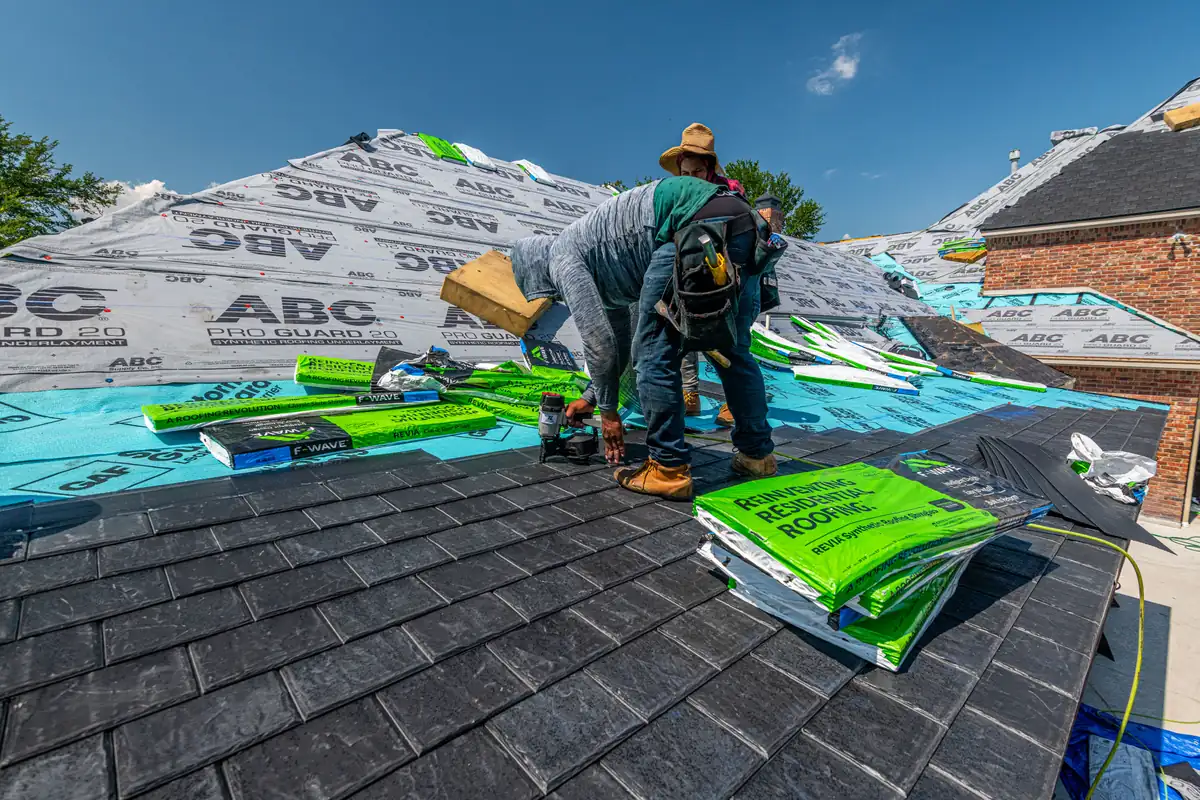
Roofing advertising postcards work best as an attention trigger. 94% of homeowners start their contractor search online. A postcard's real job is to earn a glance and a memory that sends the homeowner toward a search or a phone call minutes or days later. A postcard loaded with a hard sell and a discount code competes with every other piece of paper in the mailbox and usually loses that fight. A postcard's job is to get the name remembered long enough to be searched. For the free channels that earn the same attention without a print bill, creative, low-cost plays worth testing first cover real job photos, review generation, and local partnerships.
Two moments actually earn that second look:
- A storm just hit the neighborhood and homeowners are already checking their roofs
- A job finished on the same street, visible from the sidewalk, with real proof already sitting there
What to Put on a Roofing Advertising Postcard
A roofing advertising postcard earns a glance in about two seconds. Everything on it competes for that window, so the card needs to work harder with less. A card carrying a different logo or color from the truck that pulls up later reads as two separate companies, a consistency problem the roofing branding guide works through.
- A real, specific trigger, named plainly: the storm date, or "we just finished the Hendricks' roof three doors down." Skip the generic "storms happen, call us" line.
- One clear photo, ideally the actual finished job or a real before-and-after. Skip the stock image; it could belong to any roofer in the country.
- The business name and a phone number a real person actually answers, printed large enough to read from across a kitchen counter
- A simple, single way to respond: call the number or visit one short, memorable URL. Pick one; two competing calls to action split the response.
- A time-bound cue tied to the real trigger, such as "roofs on this street are getting checked this week." Skip a manufactured deadline with no real event behind it.
None of this works if the phone rings and nobody picks up. The card's whole job ends the moment someone dials or searches. Crews weighing the rest of the print and mail lineup, business cards, door hangers, truck wraps, can compare the full set in roofing marketing materials.
Timing and Targeting: Two Windows That Actually Work
A roofing advertising postcard mailed on a schedule, with no trigger behind it, reads like junk mail because it is junk mail. The two windows below are the ones with a real, checkable event driving them.
| Trigger | Radius | Message focus |
|---|---|---|
| A confirmed storm event nearby | Tight, limited to the streets with visible damage | A specific, dated event, timed to jobs already forming nearby |
| A finished job on the street | The 10 to 50 closest homes | The visible work next door, with a real completion date |
Texas leads the country in hail, with 1,123 hail events in 2023 alone. That is a real, checkable trigger a mailing can target within days of a confirmed storm. The tighter the radius around the actual damage, the better a storm-triggered mailing performs; a card blasted to an entire ZIP code with no confirmed damage on those specific streets loses that edge and reads as generic. What else needs to be staged before that specific week arrives covers the budget and the answering system a storm-triggered mailing needs behind it.
Test a Postcard Mailing Before You Scale It
A new roofing advertising postcard deserves a small, real test before a full print run goes out. The order matters:
- Confirm a real trigger exists: a specific storm event or a specific finished job
- Set a tight radius around that trigger, limited to the closest streets to where it happened
- Prepare the phones to answer before a single card goes in the mail
- Send the small batch and track every response for two full weeks
- Scale the radius or the print run only once the small batch produces a real, traceable job
What Decides Whether a Postcard Actually Turns Into a Job
A roofing advertising postcard typically earns a delayed response: a homeowner sets it on the counter, searches the business name later that day, or checks reviews before ever dialing. What happens in that gap decides whether the postcard's cost turns into a booked job.
| What the homeowner does next | What it depends on |
|---|---|
| Searches the business name online | The site that shows up: whether it loads fast and looks like an active, trustworthy company |
| Calls the number printed on the card | How fast the phone gets answered, including after hours |
| Checks the Google Business Profile first | Recent reviews, real photos, and hours that actually match reality |
One missed call costs the average roofing contractor over $2,500. 62% of homeowners hire the first contractor who answers. 53% of mobile visitors are gone before a three-second site ever finishes loading. A postcard that successfully drives someone to search can still lose the job before the phone ever rings.
A postcard's job ends the moment someone searches or dials. What the site, the phone, and the Google profile do next decides whether that spend turns into a job.
What The Trust Process Actually Does About Roofing Advertising Postcards
The Trust Process does not design, print, or mail roofing advertising postcards, and it does not manage any advertising campaign on any platform. Its work covers the three things that decide what happens after a postcard actually gets a homeowner to search or dial:
- The site that shows up in that search, and whether it loads fast enough to hold her attention
- How fast the phone gets answered once she actually dials the number on the card
- Whether the Google Business Profile backs up what the crew actually does
For a crew already running roofing advertising in any form, including postcards, what actually decides whether that spend turns into jobs is worth a straight look before printing another batch.
Frequently Asked Questions
Do roofing advertising postcards still work in 2026?
Yes, when they are tied to a real, checkable trigger like a nearby storm or a finished job on the same street. A postcard mailed on a fixed schedule with no trigger behind it competes with the rest of that day's mail and mostly loses.
What should a roofing advertising postcard include?
A real, specific trigger named plainly, one clear photo of actual work, a business name and a number that gets answered, and one simple way to respond. Skip the generic "storms happen, call us" language and a stock photo that could belong to any roofing company.
How do you target a roofing advertising postcard mailing?
Target a tight radius around a real event: the streets with confirmed storm damage, or the 10 to 50 homes closest to a job that just finished. A mailing sent to an entire ZIP code with no specific trigger behind it reads as generic and performs worse.
How can you tell if a roofing advertising postcard actually produced a job?
Ask every caller how they heard about the company and log the answer, put a short, memorable URL or a dedicated line on the card that nowhere else uses, and watch call volume from the target streets for two weeks after the drop. Skip the batch that cannot be traced back to a specific mailing.
Does The Trust Process design or send roofing advertising postcards?
No. The Trust Process does not design, print, or mail roofing advertising postcards, and it does not manage advertising campaigns on any platform. Its work covers what decides whether a postcard's cost turns into a job: the site, the phone, and the Google Business Profile a homeowner checks next.