Marketing Operations Playbook for Roofing Firms (Full Guide)
A marketing operations playbook for roofing firms is the operating system behind the marketing a company already runs. It covers who calls a new lead, how fast, what happens after that first call, and how the owner knows it worked. Most roofing companies run plenty of tactics already. Ads. A Google profile. Maybe a mailer during storm season. The operating layer around those tactics decides how many of them turn into booked jobs. This playbook covers four pillars: response time, follow-up cadence, budget discipline, and a KPI review loop that shows where a lead is actually being lost.

What a Marketing Operations Playbook for Roofing Firms Actually Covers
A marketing operations playbook for roofing firms covers four pillars. Each one answers a different question about what happens once a lead already exists:
- Response time: how fast a new lead gets a call or text
- Follow-up cadence: what happens after that first call if nobody answers
- Budget and channel mix: where the marketing dollars actually go
- KPI review: how the owner knows whether any of it is working
Generating the lead in the first place is a separate subject, covered in generating your own roofing leads. This playbook picks up from the moment a lead already exists in the system.
The Response-Time Pillar Most Playbooks Skip
Response time is the pillar most roofing marketing advice skips, and it is also the one with the clearest data behind it. Call a lead inside five minutes and you are 100x more likely to reach them and 21x more likely to qualify them than if you wait half an hour.
Five minutes is the number every other pillar in this playbook is built around.
| Response Window | What It Means for the Lead |
|---|---|
| Within 5 minutes | 100x more likely to reach the homeowner, 21x more likely to qualify the lead |
| Within 30 minutes | The baseline those multipliers are measured against |
| After 1 hour | Most of that advantage is gone |
One missed call costs the average roofing contractor over $2,500. Miss 10 in a month and that is $25,000 gone, and none of it shows up on a marketing invoice. For the full mechanics of building this into an around-the-clock system, see why the first five minutes decide the job.
The Follow-Up Cadence That Keeps Leads From Going Cold
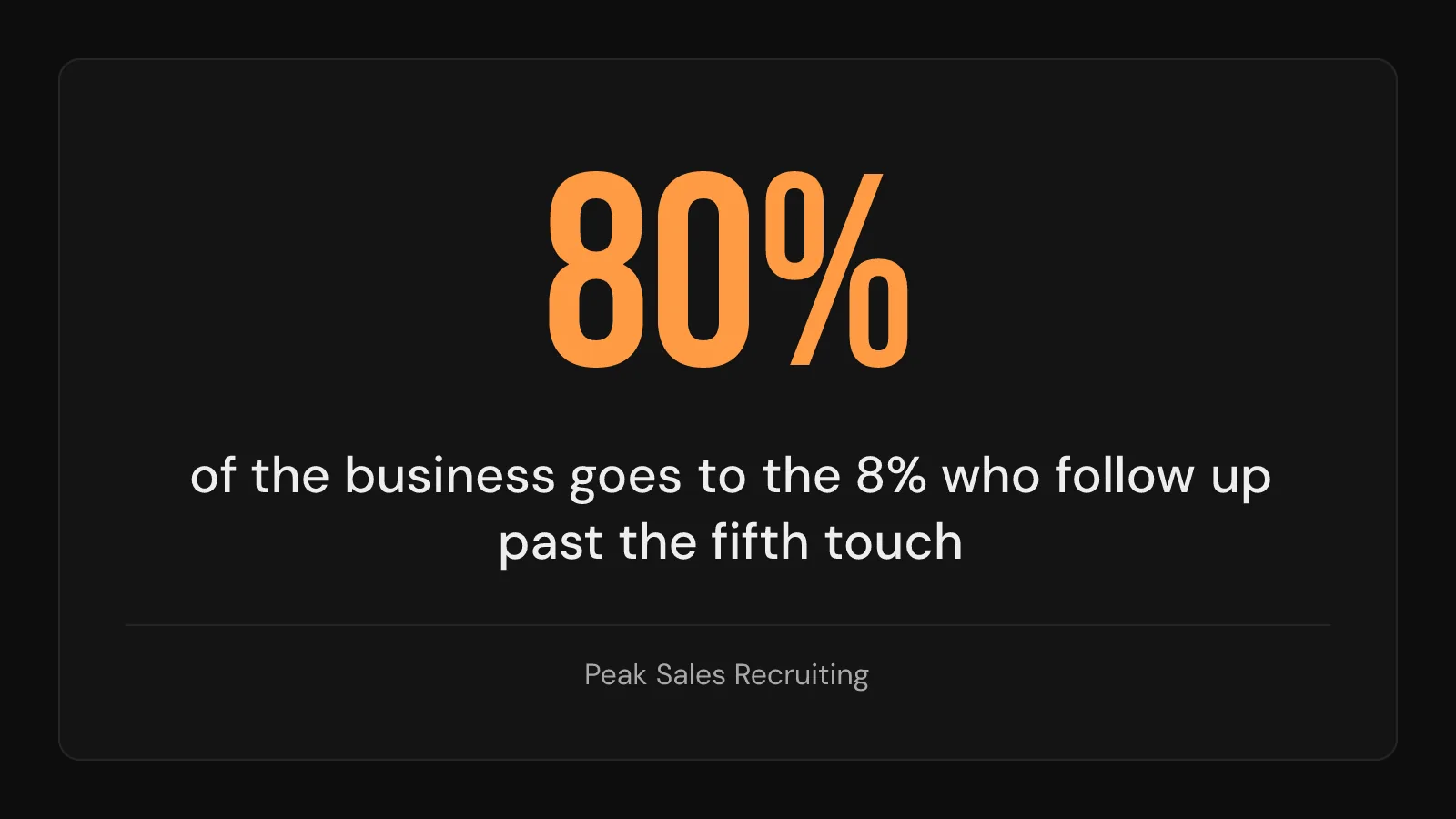
A single call rarely closes a roofing job. Most homeowners need more than one touch before they commit to a contractor, and that is exactly where most follow-up systems quietly stop. The 8% who keep following up past the fifth touch end up with 80% of the business.
A simple four-touch cadence covers most of that gap:
- Day 1: Call and text within minutes of the lead arriving, using the response-time pillar above.
- Day 2: A second call if there is no answer, plus a short text confirming the roofer tried to reach them.
- Day 5: A third touch on a different channel. Email with a couple of recent job photos works well here.
- Day 10: A final scheduled call before the lead moves into a longer, lower-frequency nurture list.
Four scheduled touches, sitting on a calendar rather than in someone's memory, cover most of the gap between the 8% and everyone else. Whatever system is tracking that calendar matters here: see what a crm for roofing company actually needs to do once the lead is already logged. Plenty of crews start that calendar on a free roofing CRM plan; what the no-cost tier actually includes is worth reading before assuming it covers the same automated reminders a paid plan does.
Budget and Channel Mix, Without the Guesswork
Budget is the pillar owners spend the most energy worrying about, and it usually needs the least drama. A simple split across two or three channels, reviewed every quarter against which leads actually turned into booked jobs, beats a complicated attribution model most roofing companies rarely have time to maintain anyway. Cold calling is one channel worth testing in that mix; see the cold calling playbook that works.
A quarterly budget review only needs to answer three questions:
- Which channel is producing leads that actually turn into booked jobs
- Which channel is producing calls but few real jobs
- Which channel is worth cutting or growing next quarter
For a full channel-by-channel breakdown, see a roofing marketing plan your crew can actually run.
The KPI Review That Tells You the System Is Working
A playbook without a review point tends to drift within a season. The KPI review is a short, recurring look at three numbers: response time, follow-up completion, and close rate. The industry closes 15 to 27% of its leads. Top crews clear 30%. Shared leads from the big marketplaces close at 5 to 15%.
| Lead Source | Typical Close Rate |
|---|---|
| Industry average | 15% to 27% |
| Top-performing crews | Around 30% |
| Shared or marketplace leads | 5% to 15% |
Where a roofing company's own numbers land on that table is the real measure of owning your lead pipeline versus paying for shared leads month after month. That number is worth checking on a regular calendar, even in a season that feels busy.
Frequently Asked Questions
Is it worth building a formal marketing operations playbook if my roofing company already has steady leads?
Steady leads are exactly the situation this playbook is built for. A single missed call already costs the average roofing contractor over $2,500, and steady lead flow just means that cost repeats every week. The playbook is what protects the leads a roofing company is already paying to generate.
Why do I need a marketing operations playbook if I already pay someone for roofing marketing?
A marketing vendor usually owns the tactics: the ads, the posts, the campaigns that bring a lead in the door. The operations playbook owns everything that happens after that lead arrives: who calls, how fast, and what the follow-up looks like. Most roofing companies already pay for the first part, and the second part is usually still sitting undone.
Why would a marketing operations playbook hold up when a system like this fell apart before?
Most homemade systems fail because nobody owns the weekly check on whether they are actually working. The KPI review in this playbook is built specifically to catch that: a short, recurring look at response time and close rate that surfaces a slipping habit before it costs a season of leads. A system with a built-in review point is harder to let quietly die.
What actually belongs in a marketing operations playbook for roofing firms?
Four things: how fast a new lead gets contacted, what the follow-up sequence looks like after that first call, how the marketing budget is split across channels, and a regular review of the numbers that show whether the system is converting. Individual tactics, like which channel to run or which script to use, live inside that operating layer.
How often should a roofing company revisit its marketing operations playbook?
A quick numbers check monthly: response times, follow-up completion, and close rate. A fuller review once a quarter, when there is enough data to see a real pattern rather than a single bad week. Storm season is worth an extra look, since call volume and response times both shift fast.