How to Generate Residential Roofing Leads: The Owner's Guide
Most owner-operators already know how to generate residential roofing leads. The channels are no secret. The catch is that most of them rent you attention for as long as you keep paying, and they go quiet the day you stop. This guide walks through the residential lead sources that put homeowners in front of your crew and stay yours once they are built: your Google Business Profile, your reviews, referrals from finished roofs, and a website that shows up in local search. It also covers the part most lead-generation articles skip. The follow-up behind a lead decides whether it ever becomes a booked job. For how all of these pieces fit together as one build, see roofing lead generation built and run as a system.
How to generate residential roofing leads that stay yours
There are two kinds of residential lead sources. The ones you rent, and the ones you own. Rented leads stop the day the invoice does. Owned channels keep sending homeowners your way long after the work to build them is done. Here is how the common sources compare for a residential contractor.
| Lead source | What it costs you | Who owns the relationship | Staying power |
|---|---|---|---|
| Google Business Profile and reviews | Time and consistency | You | Compounds every month |
| Referrals from finished roofs | A thank-you and a simple system | You | Grows with every job |
| Your website in local search | Build once, improve over time | You | Works while you sleep |
| Bought or shared marketplace leads | A fee for every lead, resold to rivals | The marketplace | Gone when you stop paying |
That is the honest answer to how to generate residential roofing leads. Build the sources that stay yours, then protect them so the demand you create does not slip away.
What counts as a residential (domestic) roofing lead?
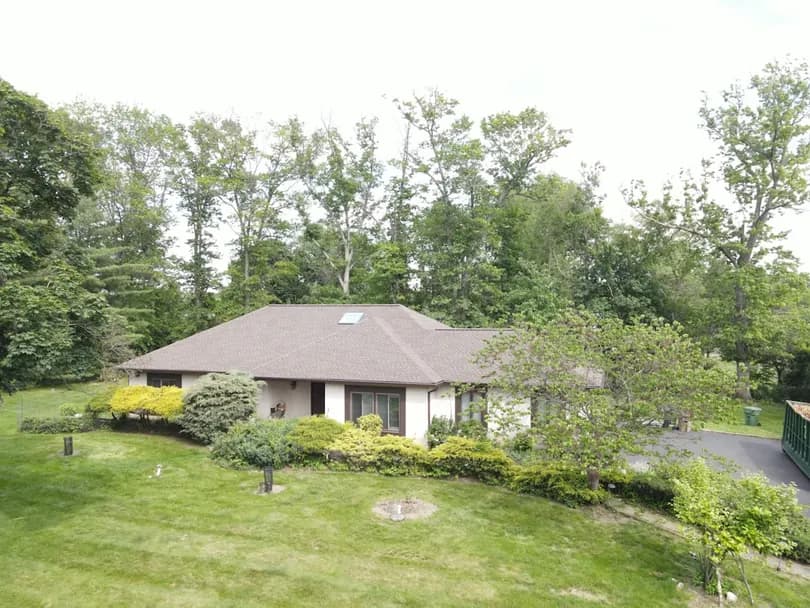
A residential roofing lead is a homeowner who needs a roof on the place they live. Some contractors search for how to get domestic roofing leads, which is the same request under a different word. Domestic means residential here: single-family and small multi-family homes rather than the commercial buildings a property manager signs off on. That distinction changes everything about how you find and win the work.
A residential lead usually looks like this:
- A homeowner facing a large purchase she cannot easily judge on her own
- One roof, one address, one relationship you can earn directly
- A buyer who reads your reviews and clocks your response speed before she ever calls
Win local search with your Google Business Profile and reviews
For residential work, local search is the fastest owned channel you can build. 94% of homeowners start their contractor search online, and most of that search runs through Google's local results. Your Google Business Profile is the storefront they find first, yet 56% of local businesses have never even claimed their Google Business Profile. A complete, active profile puts you ahead before you spend anything on ads. For a closer look at what percentage of roofing leads actually trace back to Google search, see the verified data on roofing leads from Google.
Get the profile working first:
- Claim and completely fill out your Google Business Profile
- Post real photos of finished roofs every week instead of stock images
- Ask every happy homeowner for a review the day the job wraps
- Reply to every review, the tough ones included
- Keep your business name, address, and phone number identical everywhere online
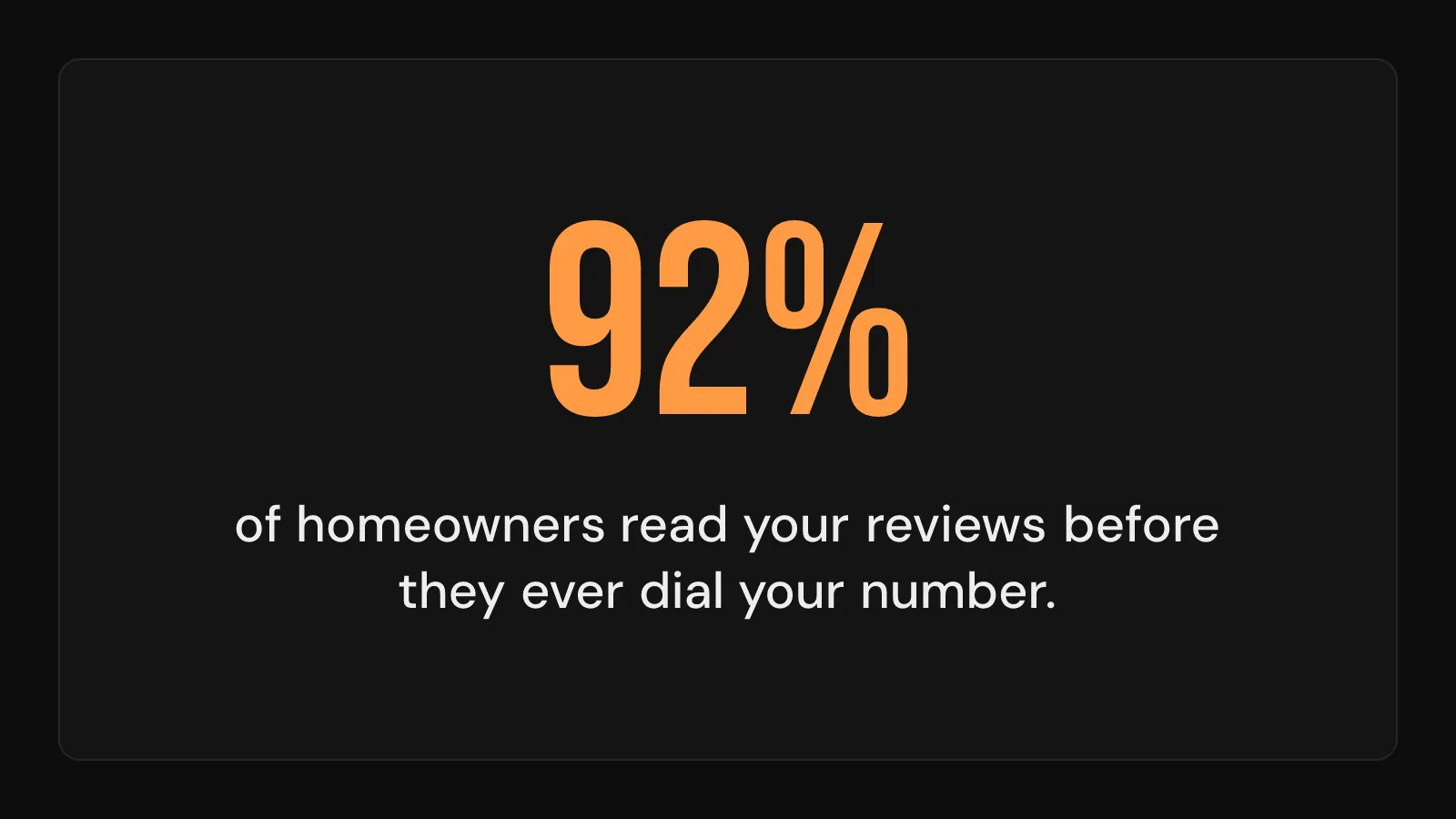
Reviews do real work for a residential buyer. 92% of homeowners read your reviews before they ever dial your number. Recent reviews carry the most weight, so a steady trickle beats a wall of two-year-old praise. Ranking in the map pack is its own craft, and it is worth reading up on local SEO for roofers once your profile is live.
Build a referral engine for residential jobs
Referrals are the highest-trust residential lead there is. A referred homeowner walks in already believing you will show up, because someone she trusts told her so. Most roofers treat a referral like the job is already theirs and never build a system to earn the next one. Referrals are one channel among several, and for the wider view you can read the broader guide to getting roofing leads. Here is the sequence that keeps them coming:
- Ask at the peak moment, right when the homeowner is standing in the driveway looking at the finished roof.
- Make it one tap. Hand them a link or a card so referring you takes seconds.
- Reward both sides. A small thank-you to the referrer and something for the new homeowner keeps the loop turning.
- Follow up. A short message a month later reminds them you are still the roofer they recommend.
For the honest read on what happens to a referral once it reaches you, the straight answer on roofing referral leads covers the follow-up and profile work that keeps it from going cold.
A referred homeowner already trusts you before you ever knock. That is the cheapest, warmest residential lead you will ever get.
Own your leads instead of buying them
When the pipeline feels slow, buying leads looks like the fast fix. It rarely is. Shared marketplace leads get sold to several roofers at once, so you are racing three other trucks to the same driveway. The numbers show it. The industry closes 15 to 27% of its leads. Top crews clear 30%. Shared leads from the big marketplaces close at 5 to 15%. For a full breakdown of what buying costs against what generating costs, see buy roofing leads vs generate roofing leads.
Pay per close roofing leads try to soften that risk by only charging once a lead turns into a job, but the fee is priced to cover the same close-rate spread, and the race to get there first never goes away. Whichever paid model gets considered, how to evaluate a roofing lead generation service before signing lays out the contract terms and red flags worth checking first.
The gap comes down to who the homeowner was looking for:
- The homeowner came looking for you, so she is warmer before the first word
- No one else is racing you to the same driveway
- The channel keeps working after you stop paying
| Lead type | Who else is chasing it | How it tends to close |
|---|---|---|
| Owned (search, reviews, referrals) | No one. It is yours. | Best. She came looking for you. |
| Shared marketplace lead | Several roofers at once | Weakest. You are one of four calls. |
Knowing how to generate residential roofing leads matters less than keeping the ones you already earn. If you want the full breakdown, read buying roofing leads versus owning them, then start building your own roofing leads system so the next slow month does not send you back to the marketplace.
Generating the lead is only half the job
Every channel above puts a homeowner in front of you. What happens in the next five minutes decides whether she becomes a booked job. 78% of homeowners go with the first company that responds. Most owner-operators lose booked jobs to slow response even when the leads are coming in fine. The demand is there. The follow-up leaks it.
The leak usually hides in one of four places:
- A website that does not earn trust on a phone
- Calls that go unanswered after hours
- Follow-up that dies after day two
- A Google profile that undersells the work your crew actually does
The mechanics of closing that gap are their own topic. See a five-minute response system for the play-by-play.
Frequently Asked Questions
How much do roofers pay for residential leads?
It varies by market and lead type. Shared residential leads are usually resold to several contractors at once, so the real cost shows up as a low close rate on top of the per-lead fee. Owned channels like reviews and referrals cost time instead of a per-lead charge, and the homeowner arrives already interested.
What is the easiest way to generate residential roofing leads without buying them?
The fastest owned start is a claimed, complete Google Business Profile paired with a steady flow of recent reviews. Together they put you in local search right when a homeowner is looking. Once those are running, referrals from finished roofs become the easiest repeat source you have.
Can AI generate residential roofing leads for you?
Software cannot manufacture demand that is not already there. Automation is strongest on the leads you already earn: it answers missed calls, replies in seconds, and keeps following up so fewer homeowners slip away while you are on a roof. Think of it as the system that catches the calls your office misses, and stay skeptical of any tool that promises leads out of nothing.
Should you focus on generating residential roofing leads or converting the ones you already get?
Start with whichever is actually leaking. If leads come in but jobs still slip, the gap is in response and follow-up, and that is where a booked job is won or lost. A quick walkthrough of your website, follow-up, and booking path usually shows which one is costing you more.