How to Get Roofing Leads on Facebook (Organic and Paid Ways)
How to get roofing leads on Facebook comes down to two different games, and most guides only walk you through one of them. You can build the business page right, post real job photos, join local groups, and get inbound messages without spending a dollar. You can also run lead ads and pay for reach on top of that. Both genuinely work. What almost nobody selling you a Facebook playbook tells you is that the tactic that produced the lead barely matters next to what happens in the next five minutes on your side of it. That five minutes is the part that decides whether it turns into leads that actually turn into signed jobs.
How to Get Roofing Leads on Facebook (Organic Tactics That Work)
The organic side of this game starts with the business page itself, and most roofing companies never finish setting it up. Service area left blank. Photo grid full of stock images instead of real jobs. Reviews tab hidden or empty. None of that costs money to fix, and all of it is the difference between a homeowner scrolling past you and a homeowner messaging you.
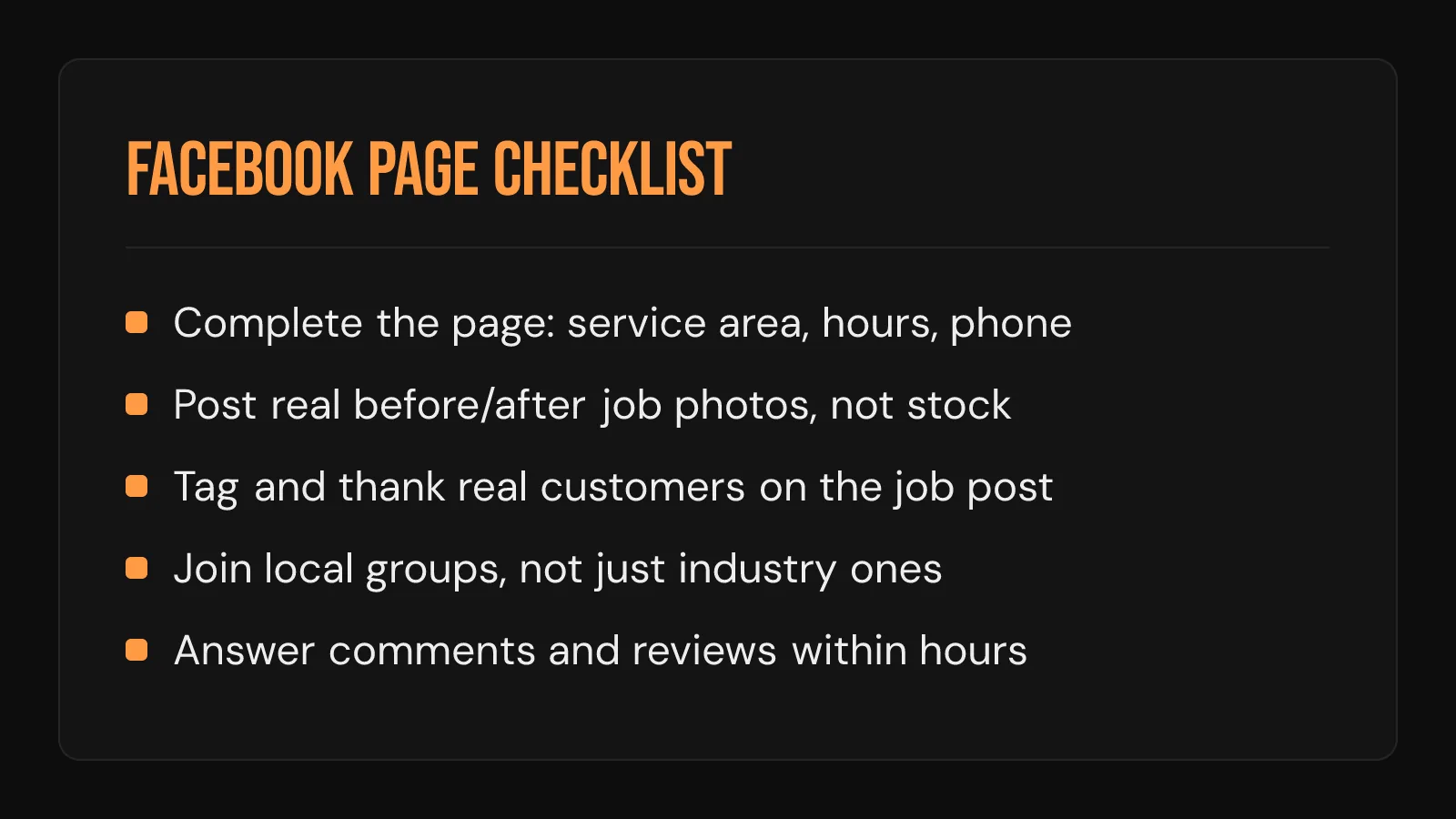
Once the page itself is solid, the lead flow comes from five habits, done consistently instead of in one weekend push:
- Complete the business page fully: service area, hours, a working phone number, and a "message us" button that actually gets checked.
- Post real before/after job photos instead of stock roofing images. A homeowner scrolling a feed can tell the difference instantly.
- Tag and thank real customers (with permission) on the job post. Their friends see it, and their friends are your next zip code.
- Join local community groups instead of sticking to roofing-industry ones. A homeowner asking "anyone know a good roofer" in a neighborhood group is a warmer lead than any cold ad click.
- Answer comments and reviews within hours instead of days. A thread where you never replied reads like a business that will not answer the phone either.
| Organic tactic | Effort | Why it works |
|---|---|---|
| Complete business page | Low, one-time | Removes the trust gap before a homeowner ever messages you |
| Before/after job photos | Low, ongoing | Proof of real work beats any ad copy |
| Local community groups | Medium, ongoing | Reaches homeowners already asking for a referral |
| Review replies | Low, ongoing | Signals a business that actually responds |
None of this requires a media budget. It requires someone treating the page like a storefront window instead of a bulletin board nobody checks. The quality of roofing leads Facebook produces depends less on the platform and more on what happens the moment one lands in your inbox, whether it came from a group post or a paid click.
Running Facebook Ads for Roofing Leads
Paid Facebook lead generation for roofers usually means one of two ad formats: a lead ad that captures a name and phone number without leaving Facebook, or a link ad that sends the click to your own site. Lead ads convert at a lower cost per lead because there is less friction. Link ads cost more per click but send a homeowner somewhere you fully control. Anyone pitching to manage those ads will open with a results page, and what a roofing leads case study leaves out is the number to ask about before signing anything.
Underneath either format, three variables move the needle more than creative:
- Audience radius. Tight service-area targeting beats broad interest targeting almost every time for a local trade.
- Campaign objective. Aim the campaign at leads or messages instead of "awareness," which burns budget on people who will never call.
- Retargeting. Site visitors who already looked once are far warmer than a cold audience.
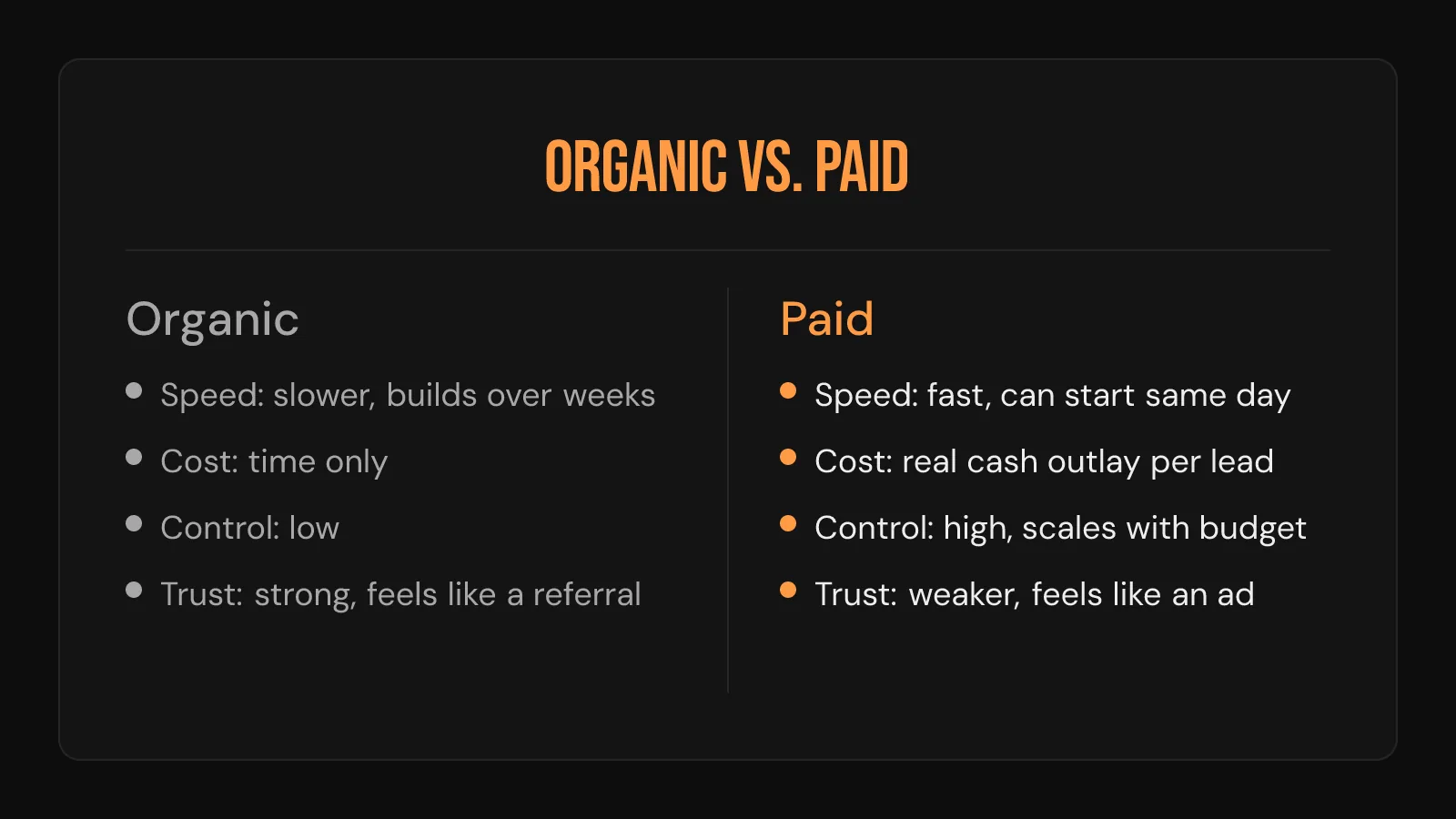
| Organic | Paid | |
|---|---|---|
| Speed to first lead | Slower, builds over weeks | Fast, can start same day |
| Typical cost | Time only | Real cash outlay per lead |
| Control over volume | Low | High, scales with budget |
| Trust signal carried | Strong, feels like a referral | Weaker, feels like an ad |
Realistic cost-per-lead expectations vary by market. That's how to get roofing leads from Facebook without turning into a full-time social media manager: pick the lane that fits your bandwidth, run it consistently, and stop treating the platform as the thing that decides whether you get the job. Facebook is one channel inside a bigger decision, and the four paths that decide which channel gets funded first matter more than whether this one channel runs organic or paid. And if you are leaning toward handing the whole channel to a vendor instead, read what a roofing marketing agency retainer actually covers before you sign a scope built around ad management.
The Part Every Facebook Guide Skips
Every guide on this topic, including this one so far, teaches you how to get the click, the comment, or the message. Almost none of them address what happens the moment that lead lands in your inbox. That gap is the real story.
Here is what actually decides whether a Facebook lead turns into a signed job, in order:
- The lead arrives: as a comment, a Messenger ping, or a lead-ad form submission. This is what every Facebook guide covers.
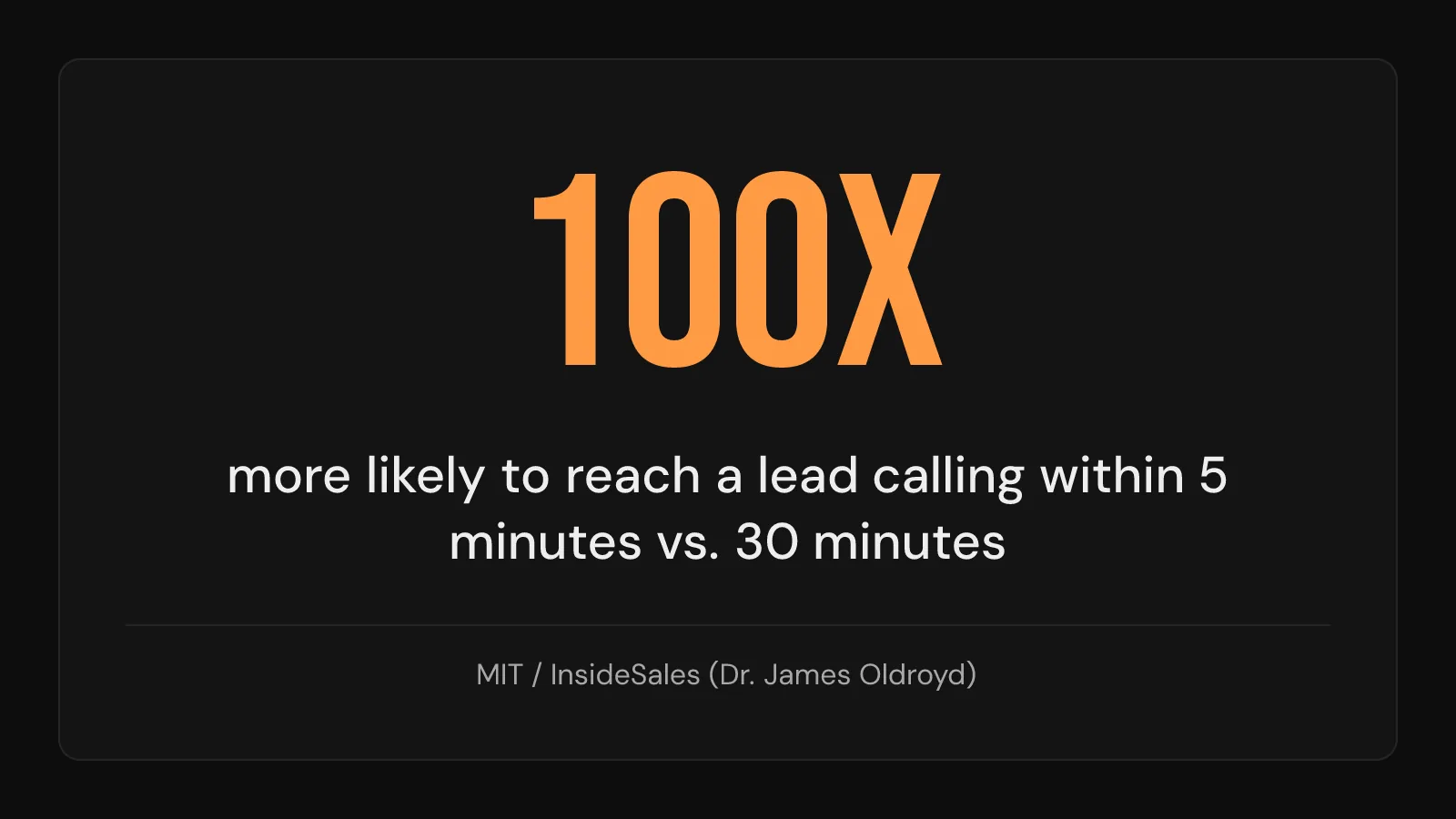
- The response window opens. Call a lead inside five minutes and you are 100x more likely to reach them and 21x more likely to qualify them than if you wait half an hour.
- The follow-up cadence runs (or doesn't) over the next few days. Most roofing companies stop chasing a lead after one unanswered call, right when a homeowner is still comparing other bids. Five follow-up email templates worth copying cover exactly that stretch.
- She clicks through to see who you actually are. 92% of homeowners read your reviews before they ever dial your number, so whatever she finds there confirms the decision or kills it.
Call inside five minutes and you are 100x more likely to reach the homeowner at all, and the platform that produced the lead barely factors into that math. 78% of homeowners go with the first company that responds, full stop, whether the comment came from a boosted post, a free community-group thread, or a paid lead ad.
Why a five-minute response wins the job walks through what a real response system looks like once you build it instead of hoping someone checks the inbox in time.
What Has to Be True Before You Spend a Dollar on Facebook
None of the tactics above matter if the four things underneath them are broken. Whatever channel brings the click, comment, or message, these decide whether it turns into a booked job:
- A site that earns trust on a phone screen in the first few seconds. A homeowner clicking over from Facebook judges you before reading a word.
- Calls that get answered, or texted back within seconds when they don't. A missed call with no follow-up is a lost job.
- Follow-up that keeps going past day two. 67% of homeowners say communication quality decides between two close bids, and most sequences quietly stop right when that comparison is happening.
- A Google Business Profile that actually reflects the work you do. A Facebook click often ends with a Google search anyway, before the phone ever rings.
Whether it's a Facebook ad you are already running or an organic post, all of it runs into the race every lead source puts you in the moment the lead lands. For the fuller channel-specific breakdown, including where TTP draws the line, the honest answer on Facebook marketing for roofing covers it directly.
Frequently Asked Questions
Do Facebook ads actually work for generating roofing leads?
Yes, but most guides about how to get roofing leads on Facebook stop at the ad click and never explain what happens after. 78% of homeowners go with the first company that responds, so an ad campaign with no fast follow-up behind it is spending money to lose a race it never entered correctly.
What went wrong if I already posted on Facebook and never got a real job from it?
The post or the group thread usually did its job fine. What happened in the minutes right after someone commented or messaged is where most of those leads actually died, since a homeowner who hears nothing back for a few hours has usually already messaged the next crew in the same thread.
Should I pay for Facebook ads, or just post for free and hope for shares?
Organic and paid both work as real lead sources. The actual differentiator is what happens after either one produces a lead. The lane you picked to get there matters far less.
If someone else already runs my Facebook page, do I still need to think about this?
Whoever posts or runs ads on the page, the response-and-follow-up layer underneath it is a separate system. It is about what happens after the page or the ads do their job.
Does The Trust Process run Facebook ads or manage a roofing company's Facebook page?
No, plainly. No media buying, no ad spend management, no social-media posting, ever. What gets built instead is the mobile-trust site, the fast automated response, the follow-up cadence, and the Google Business Profile work that decides whether any lead turns into a job.